

Research & Reports

Blog thumbnail
Ebook

The Secondaries Screening Brief

May 15, 2026
5 mins read
A Secondaries Team Guide to Exclusion Diligence at Speed

The secondaries market has tripled in size since 2019, now representing roughly $240 billion in annual volume. LP expectations around diligence - on exclusions, sanctions, mandate compliance, and reputational risk - have risen in lockstep. The window to screen a 300-company portfolio has not. For deal teams operating in an auction environment, the question is no longer how much to screen, but how to do it without becoming the reason a deal slips.

This brief distills key takeaways from a recent SESAMm webinar with Jessica Huang, Managing Director and ESG Lead for Private Equity and Secondaries at Ares Management, a firm managing over $40 billion in secondaries assets across four verticals.

It covers how screening requirements differ by transaction type, what investors are actually screening for, why private market data makes this hard, and what a workflow looks like that can realistically fit inside a 48-hour timeline.
Read More

Webinar: Secondaries Investing

March 13, 2026
5 mins read

Secondaries investors evaluate large, diversified portfolios under compressed timelines, with the level of detail and underlying company visibility differing by transaction type.

In this context, screening is embedded in the underwriting workflow, not a one-off exercise: it helps apply investment guidelines, support LP opt-outs, prioritize follow-up diligence, and enable ongoing monitoring over the life of the investment.

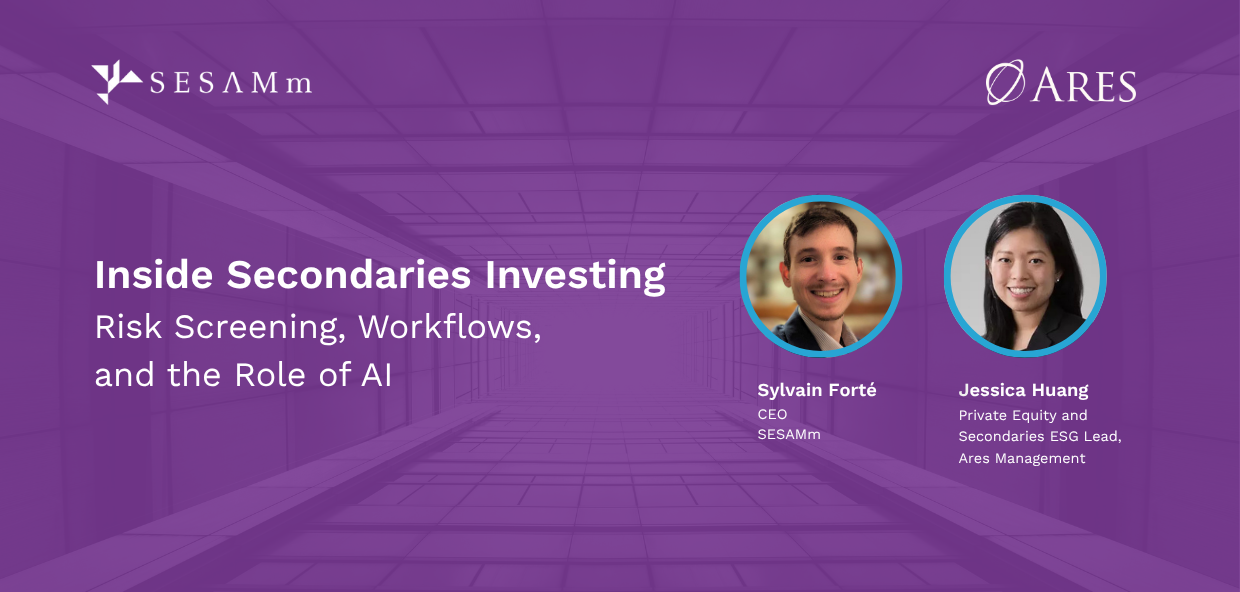
Watch this webinar replay to hear Jessica Huang, Private Equity and Secondaries ESG Lead at Ares Management, and Sylvain Forté, CEO at SESAMm, discuss:

  • The operational and data challenges secondaries teams face
  • How screening is applied in secondaries investing in practice
  • How AI helps teams scale screening and support ongoing monitoring workflows

Webinar: Private Markets in 2026

January 27, 2026
5 mins read

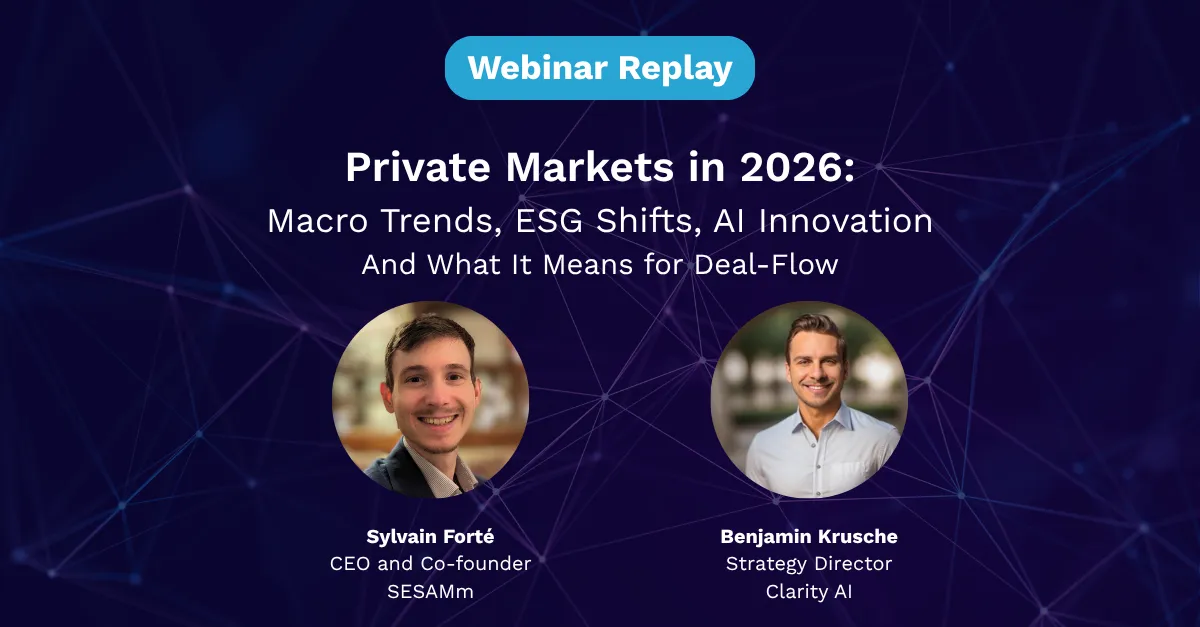
Private markets are changing fast. From new ESG regulations to advances in AI, the forces shaping investment decisions are multiplying.

Join Clarity AI and SESAMm as we explore the biggest shifts redefining private-market investing in 2026 and how data and technology are transforming due diligence, risk management, and deal flow.

Watch this replay to explore:

  • What shaped private markets in 2025 -  and what’s ahead in 2026
  • How AI is transforming due diligence, risk monitoring, and value creation
  • What these changes mean for deal-flow, risk, and competitive advantage

Ebook: Controversial Business Activities

January 13, 2026
5 mins read

Controversial business involvement is no longer a niche ESG issue. From fossil fuels and weapons to gambling, sanctions, and human rights abuses, exclusion policies are expanding and scrutiny is intensifying, especially across private markets.

As SFDR and the EU Taxonomy raise the bar, investors must prove that controversial exposures are identified, documented, and consistently screened, even when disclosures are limited.

In this ebook, SESAMm explores:

  • How exclusion rules are evolving under SFDR, the EU Taxonomy, and investor mandates
  • Why controversial involvement is harder to detect in private markets and secondaries
  • Real-world case studies revealing hidden exposure and compliance risk
  • How AI enables faster, auditable screening across public and private assets

Download the ebook to learn how investors can apply consistent, defensible exclusion screening at scale.

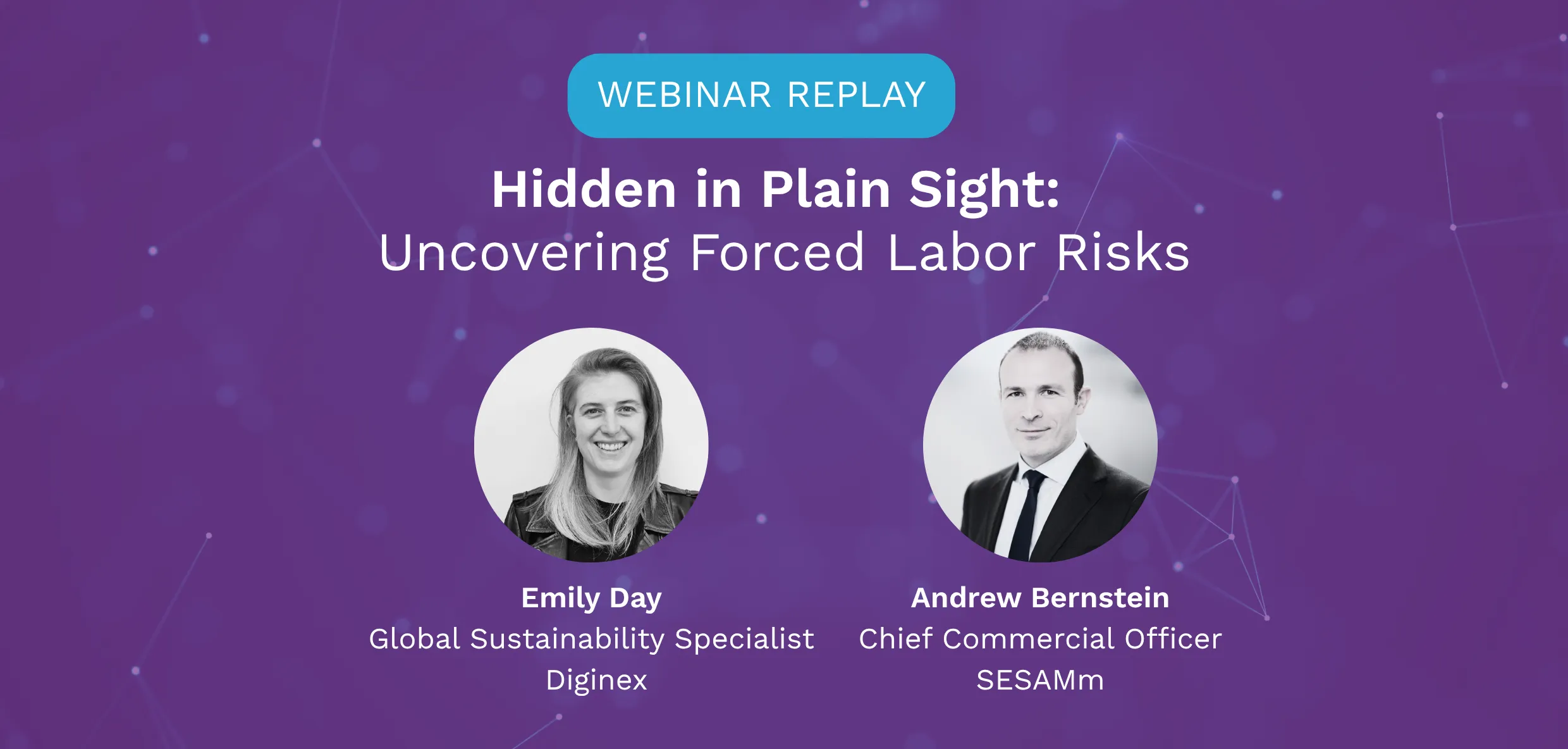
Forced labor remains a critical challenge for global businesses. Recent scandals across industrial and consumer sectors have shown how quickly hidden labor abuses can surface, sparking regulatory action, investor backlash, and lasting reputational damage.

Watch this webinar replay to hear Emily Day, Global Sustainability Specialist at Diginex, and Andrew Bernstein, Chief Commercial Officer at SESAMm, share data-driven insights and real-world lessons on how to anticipate and manage these risks effectively.

You’ll learn:

  • The evolving regulatory landscape and its implications for investors and corporations
  • Real-world case studies of forced labor controversies and their financial impact
  • How leading firms are strengthening risk detection and due diligence to stay ahead of compliance and reputational challenges

Ebook: Hidden Risk of Forced Labor

December 9, 2025
5 mins read

Forced labor remains among the most pressing human rights challenges for companies worldwide. Despite stronger regulations and corporate pledges, millions remain trapped in exploitative conditions,  often deep within complex global supply chains.

As new laws increase scrutiny and liability, the cost of blind spots is rising. Investors, corporates, and private equity firms alike must now demonstrate active due diligence or face legal, financial, and reputational consequences.

In this whitepaper, SESAMm explores:

  • The tightening global regulatory landscape on forced labor
  • Exclusive data-driven insights from SESAMm’s AI platform on labor-related controversies
  • Real-world case studies revealing how risks can remain hidden despite compliance efforts

Download the report to learn how data and AI are transforming the fight against forced labor - and how organizations can move from reactive to proactive risk management.

ESG frameworks are multiplying faster than organizations can comply with them. Supply chain visibility remains the weakest link, supplier self-disclosures are incomplete, ESG data is inconsistent, and regulatory requirements conflict across jurisdictions. Yet controversy events move fast. A reputational crisis, a forced labor allegation, or an environmental violation at a tier-two supplier can cascade through your entire supply chain in hours. Organizations that win today are those using AI to detect hidden ESG risk before the news breaks, turning fragmented data into actionable intelligence that protects brand, license to operate, and investor confidence.

Key Takeaways

  • Timely Response to ESG Controversy EventsCritical for maintaining corporate responsibility programs amid regulatory fluctuations.
  • AI-Powered Risk DetectionProactively detect and mitigate hidden ESG risk across supply chains.
  • Real-World Case StudiesUncover ESG risk that supplier questionnaires and internal data cannot expose.

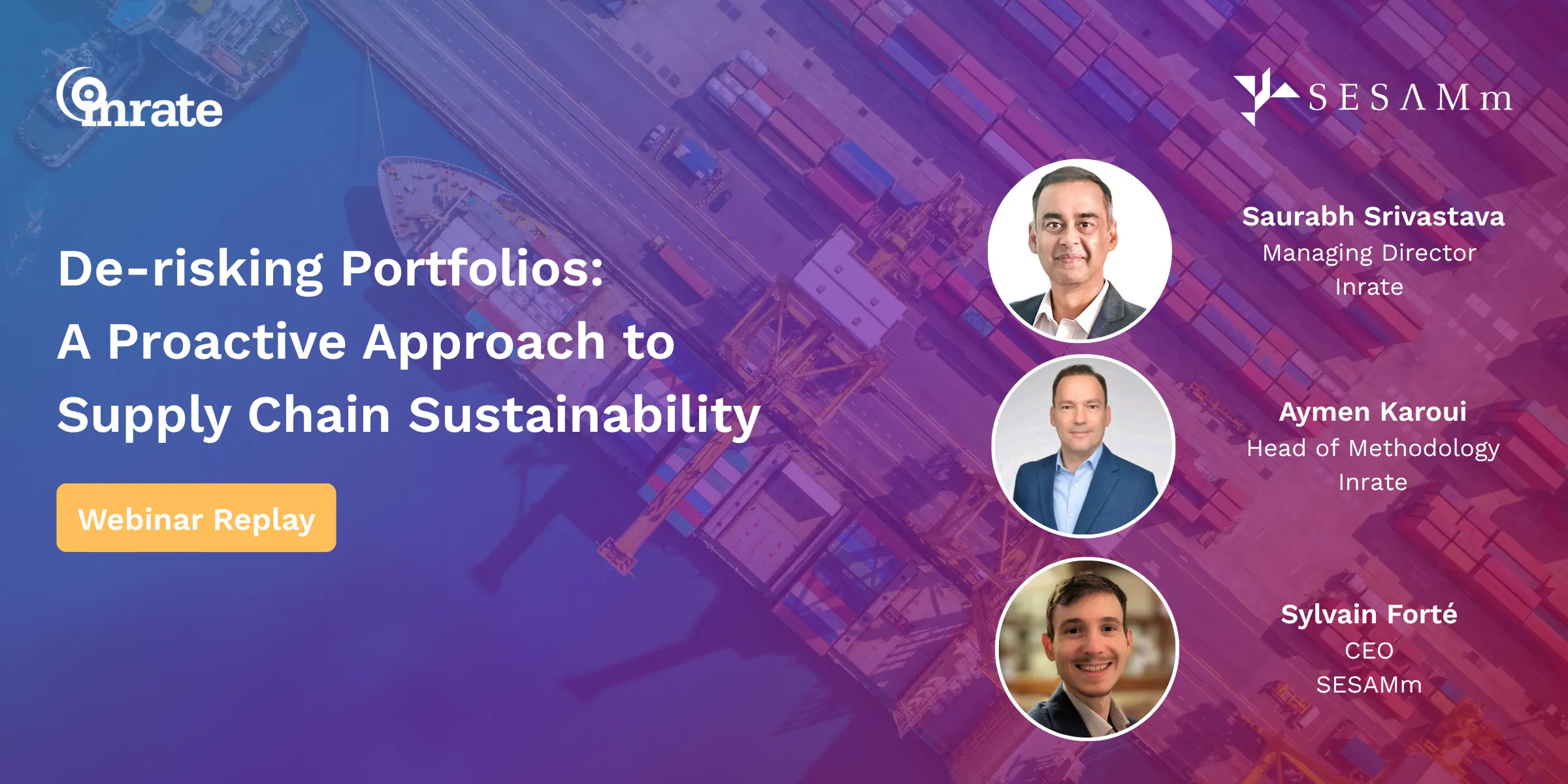
As scrutiny of corporate supply chains intensifies, investors are demanding more than policy statements and third-party audits. In this webinar, SESAMm and Inrate explore two powerful lenses for evaluating risks and sustainability impacts across global supplier networks: SESAMm’s real-time controversy detection and Inrate’s impact-driven sustainability data and ratings. Together, these approaches cover both public and private companies, go beyond self-disclosures, and enable assessments across a wide range of suppliers.

Watch this instant replay to dive into:

  • Emerging trends shaping how investors assess ESG risks and impacts across supply chains
  • The expanding role of AI in identifying hidden exposures and mapping sustainability outcomes
  • Proven strategies for combining controversy signals, ESG ratings, and emissions data to drive more informed decisions

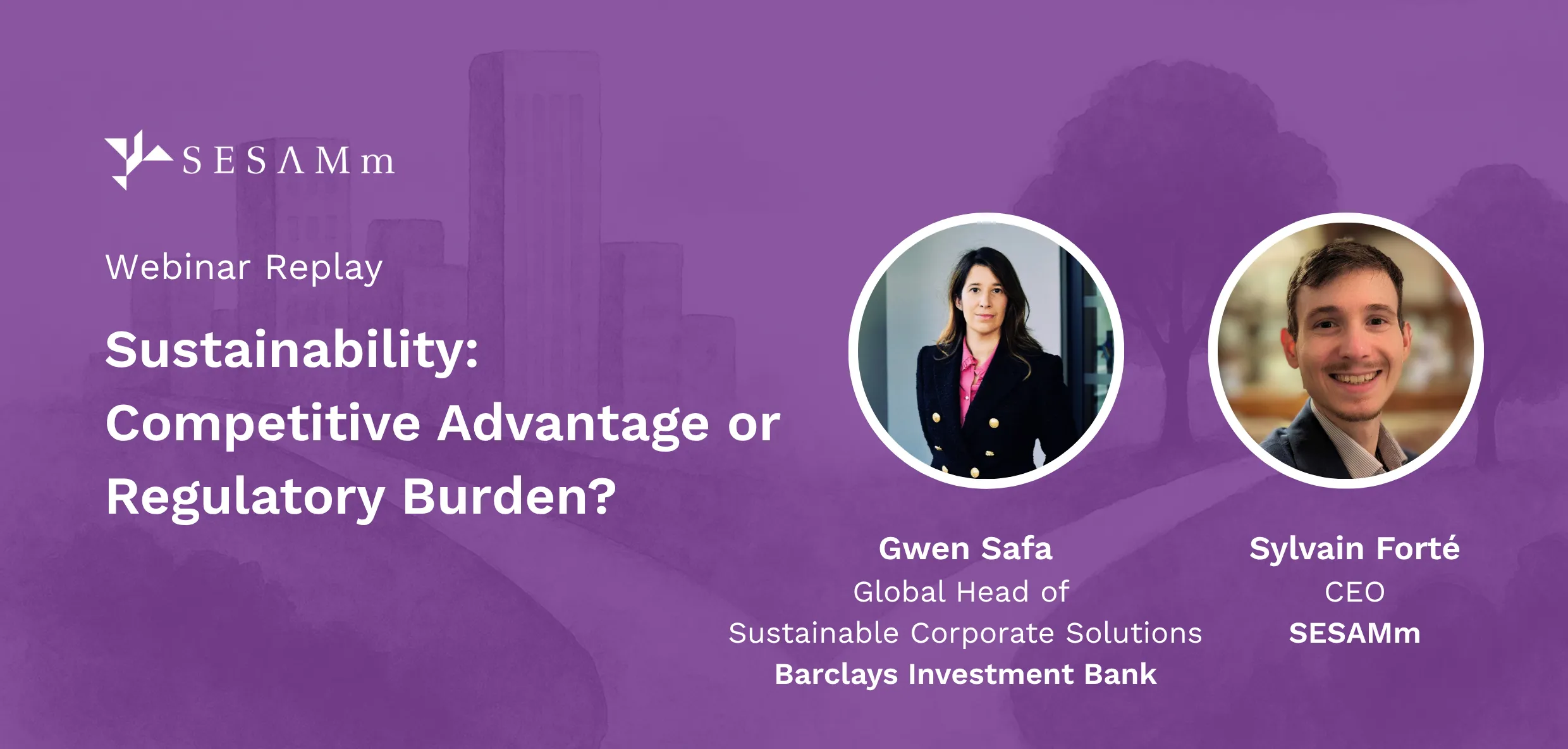
As regulatory demands grow and ESG expectations evolve, financial institutions face a critical question: Is sustainability compliance merely a cost center or can it drive measurable financial and competitive advantages?

Watch this on-demand webinar to hear Gwen Safa, Global Head of Sustainable Corporate Solutions at Barclays Investment Bank, and Sylvain Forté, CEO of SESAMm, offer actionable insights on transforming ESG challenges into strategic opportunities. 

Together, they unpack:

  • Why leading firms are reframing ESG as a value driver, not just a regulatory obligation
  • How to navigate the ESG backlash while staying aligned with long-term investor and stakeholder expectations
  • Where ESG meets reputational risk and why both are critical to financial performance and trust

Whether you're managing risk, sourcing deals, or building client trust, this session offers a candid look at the shifting role of ESG and what it means for the future of finance.

As social values shape consumer expectations, companies are under growing pressure to align with progressive causes. But not all support is genuine. SESAMm’s latest report, Beyond Greenwashing: Unveiling the Spectrum of Colorwashing, explores how brands adopt the language of inclusion, without the action to match.

Colorwashing refers to the use of social justice themes in marketing—such as gender, race, or LGBTQ+ rights—to appear ethical or inclusive while avoiding meaningful change. The report analyzes major forms, including pinkwashing, rainbowwashing, racialwashing, bluewashing, and orangewashing.

Key Takeaways:

  • Colorwashing is on the rise:  Mentions of pinkwashing, rainbowwashing, and blackwashing have grown sharply since 2020.
  • It’s about image, not impact: Many companies leverage social issues for PR, but fail to back them with policy or internal reform.
  • Consumers are calling it out: There’s an increasing backlash against symbolic gestures that lack substance, especially during high-visibility moments like Pride Month.
  • AI can help: Real-time controversy detection enables investors and communications teams to monitor and address potential colorwashing early.

Stay ahead with the latest in ESG and AI intelligence

Join our mailing list to receive new reports, event invites, and updates from SESAMm directly to your inbox.