How to Better Track Companies with Real-Time Supply Chain and Risk Analysis: Finovate Europe 2023
May 2, 2023
•
5 mins read
CEO Sylvain Forté demonstrates TextReveal’s® latest features applied to supply chain and risk analysis on the main stage of FinovateEurope 2023 in London. He also presents a quick use case on the latest Silicon Valley Bank fallout.
Discover how TextReveal can help automatically analyze millions of companies based on web content at SESAMm.
The biotech industry faces significant ESG risks, particularly in governance. Social and operational risks are less common but still material.
Across the sector, companies like Cassava Sciences, BrainStorm Cell Therapeutics, and Anavex Life Sciences frequently face governance controversies, including shareholder and class action litigation, security fraud, SEC investigations, and more. While social risks are generally secondary, they are notable in areas such as workforce reductions, layoffs following acquisitions, and labor disputes, with patient-safety considerations emerging in therapies with adverse effects.
What are the most pressing ESG challenges currently facing the biotech sector? Read on to find out.
Cassava Sciences: Governance and Transparency Concerns
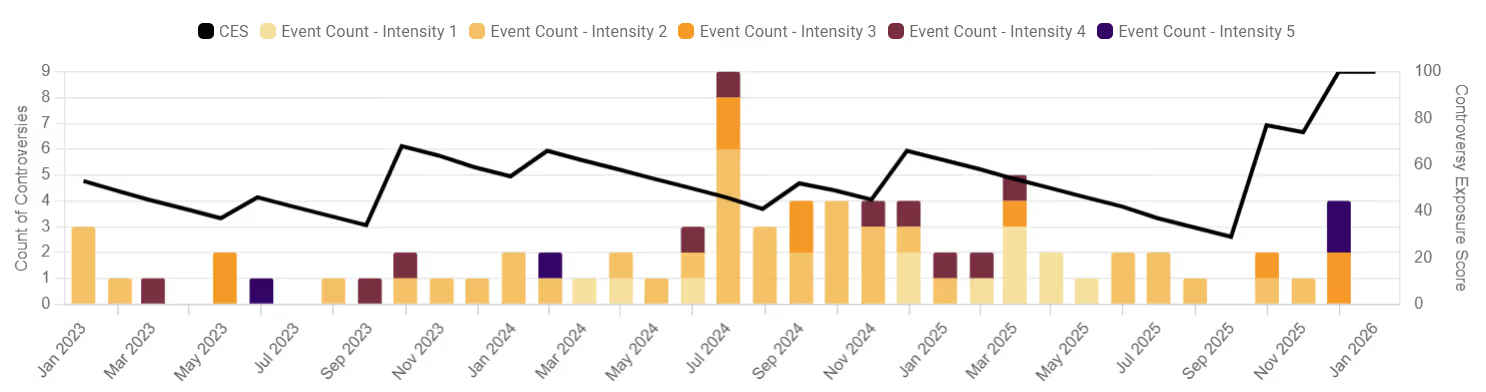
Cassava Sciences has a high Controversy Exposure Score, the result of its involvement in several severe ESG controversies. The company has faced class action and shareholder litigation, resulting in settlements of $31M and $40M over allegedly misleading statements related to its Alzheimer’s drug, Simufilam. Governance concerns are further amplified by allegations of manipulating trial data and scientific misconduct, which have attracted both SEC investigations and reports of criminal probes. Additional legal controversies include malicious prosecution and defamation lawsuits filed in response to alleged “short and distort” campaigns. On the social side, Cassava has faced a 33% reduction in its workforce, reflecting operational restructuring.
Anavex Life Sciences: Lawsuits and Regulatory Scrutiny
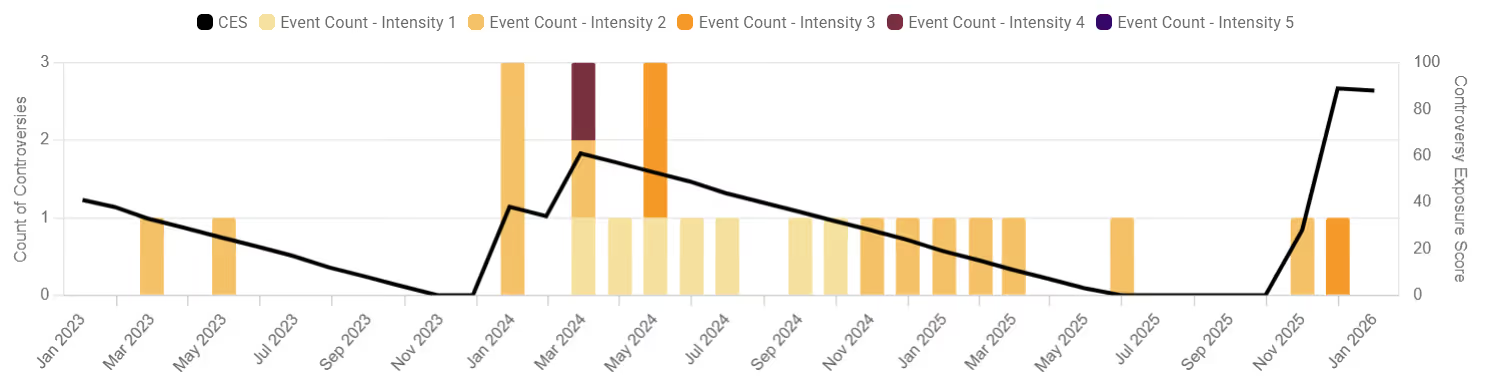
Anavex Life Sciences faces notable governance risks, primarily stemming from shareholder litigation and concerns regarding the integrity of its clinical trials. Multiple class action lawsuits allege misrepresentation and deceptive practices, particularly in reporting outcomes for Rett syndrome and Alzheimer’s disease trials. Governance concerns are compounded by data inconsistencies, changes in trial evaluation criteria, and regulatory scrutiny, including the EU’s rejection of its Alzheimer’s drug.
BrainStorm Cell Therapeutics: Fraud and Credibility Allegations
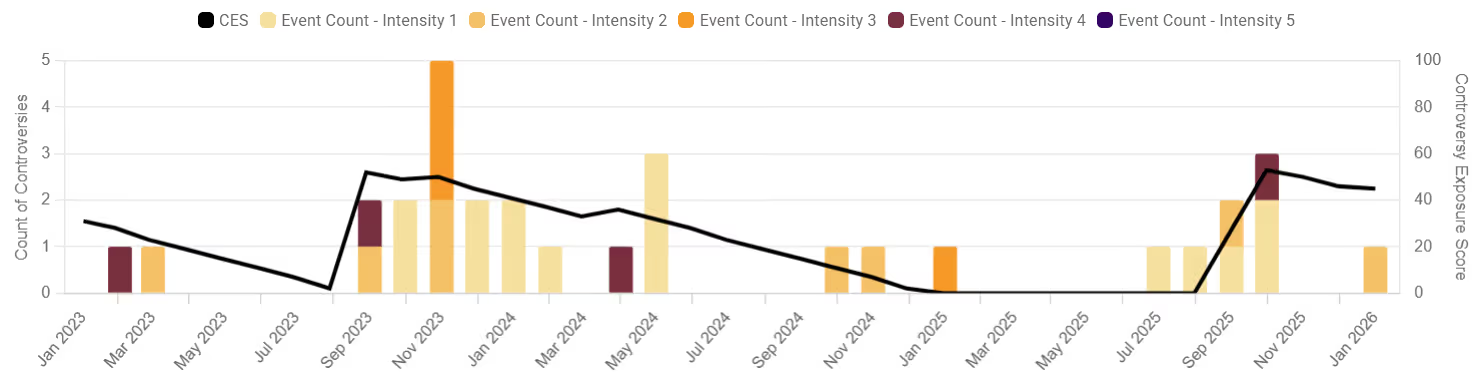
BrainStorm Cell Therapeutics exhibits a concentrated governance risk profile, with issues spanning several aspects. Class action lawsuits and securities fraud claims allege investor harm from misstatements, while the company faces lawsuits for overstating FDA feedback and misrepresenting the efficacy of its ALS therapy, NurOwn. These allegations are reinforced by FDA panel and reviewer concerns, raising questions about its scientific credibility. BrainStorm is also facing delisting from Nasdaq and a breach of contract lawsuit. On the social front, the company’s ESG exposure stems from plant shutdowns, workforce restructuring, and job cuts, raising labor practice concerns.
The biotech industry’s ESG profile is increasingly shaped by governance-related controversies, particularly around transparency, litigation, and regulatory scrutiny. Companies like Cassava Sciences exemplify how unresolved allegations, ranging from trial data manipulation to securities fraud, can significantly shake stakeholder trust and financial stability. While social and operational risks appear less frequently, workforce reductions, safety concerns, and labor disputes highlight broader vulnerabilities tied to the sector’s rapid pace and scientific complexity. As the industry continues to innovate, managing these ESG risks will be crucial not only for compliance but also for long-term credibility and sustainable growth.
Reach out to SESAMm
TextReveal’s web data analysis of over five million public and private companies is essential for keeping tabs on ESG investment risks. To learn more about how you can analyze web data or to request a demo, reach out to one of our representatives.
In private equity, as in most industries, decision-making counts on accessing accurate and valuable information. However, these firms often encounter significant challenges when sourcing reliable data, especially when dealing with small, private companies. This article dives into the complexities of identifying high-quality information on smaller companies and underscores its value in investment decisions, operational efficiency, and risk management. It also explores how advanced artificial intelligence (AI) technologies are revolutionizing the identification of these risks, leading to higher rewards and more secure investments, thus providing a competitive edge.
The challenge of identifying valuable information for Smaller Firms
Lack of valuable data
Sturgeon's Law, which states that "Ninety percent of everything is crap (or noise)," becomes particularly relevant in the context of data sourcing. For private equity and investment firms focused on small companies, finding the golden nuggets of information amid the overwhelming amount of digital noise can be daunting. The data available on these companies is often sparse, fragmented, and difficult to uncover using conventional methods. This scarcity of reliable information makes it challenging for private equity firms to make informed decisions, heightening the risk of overlooking critical issues that could impact their investment process.
The difficulties extend beyond just locating information. Many small companies operate without a significant online presence or may not be required to disclose as much information as publicly traded firms. This lack of transparency can further blur critical data points. Furthermore, the data that is available is often unstructured, residing in various forms such as social media posts, obscure local news articles, or industry-specific reports. Extracting meaningful insights from these disparate sources requires sophisticated data processing capabilities, which traditional methods often lack. As a result, private equity firms are left with a significant challenge: how to separate valuable data from the noise without missing critical risk indicators, thereby optimizing their deal sourcing and investment strategies.
Diverse language and terminology
Smaller firms frequently face existential risks, and the potential rewards for identifying these risks early on can be significant for the private equity firms that invest in them. However, mainstream methods of risk identification often fall short, as these companies may not use standardized language to describe materiality. Instead, risks are discussed in varied and context-specific ways, complicating the task of recognizing relevant information. Therefore, it is essential to adopt a specialized approach that analyzes and decodes these firms' unique terminologies and business idiosyncrasies, ultimately translating them into a standardized language that can be effectively used in risk assessment.
The diversity in language is not just a barrier to risk identification but also to the communication of these risks within and between private equity firms. When a small firm uses industry-specific jargon or localized expressions to describe potential threats, it can lead to misunderstandings or underestimations of the actual risk. For instance, a manufacturing startup in a developing country might describe supply chain disruptions in terms that do not translate easily to a global investor’s risk framework. Additionally, cultural differences in how risk is perceived and reported can lead to further complications. This linguistic diversity necessitates the use of advanced natural language processing tools that can interpret data through a common lens while considering industry-specific contexts. For an insurance company, understanding financial models, insurance principles, and regulatory frameworks is crucial. Conversely, assessing risks for a beauty company requires a focus on product safety, consumer preferences, and market trends. By appreciating the specific contexts of each industry, private equity firms can better identify and evaluate potential risks, enhancing decision-making processes, risk and portfolio management strategies, and operational efficiency.
The dynamic nature of the industries themselves further complicates the challenge. For example, the tech industry evolves rapidly, with new risks emerging as technologies develop and consumer expectations shift. What might be considered a negligible risk today could become a significant issue tomorrow as regulatory landscapes, market conditions, and technological advancements alter the playing field. In contrast, industries like agriculture or real estate might have more stable risk profiles but are subject to sudden changes due to environmental factors or policy shifts. This variability across industries means that a one-size-fits-all approach to risk assessment is inadequate. Private equity firms must adopt flexible, industry-specific risk models that can adapt to the unique characteristics and evolving landscapes of the sectors they invest in, thus optimizing their AI capabilities.
The Power of AI in Enhancing Risk Management in Small Firms
AI technologies, particularly natural language processing (NLP) and machine learning algorithms, are important tools for private equity firms aiming to monitor and manage risks in small firms. These technologies can sift through vast amounts of data, extracting the valuable 10% and identifying patterns, trends, and subtle nuances in the language used to describe risks. By detecting these patterns, AI can reveal potential risks that might not be immediately apparent through traditional methods. This proactive approach to risk identification allows firms to address issues before they escalate, providing a more comprehensive and nuanced understanding of the risks facing small firms.
AI's ability to process unstructured data is particularly valuable in this context. Many of the risks that small firms face are discussed informally in places like social media, niche blogs, or local news outlets. Traditional risk management tools might overlook these sources, but AI-powered tools can analyze them in real-time, detecting emerging threats as they develop. Moreover, AI can cross-reference these insights with structured data from financial reports, regulatory filings, and other formal documents to create a holistic risk profile. This multidimensional analysis helps private equity firms not only identify risks but also understand their potential impact, enabling more informed, data-driven decision-making that enhances operational efficiency and competitive edge.
Beyond risk identification, AI also enhances risk mitigation strategies. By continuously monitoring data and learning from new information, AI systems can adapt to changing conditions, offering updated risk assessments that reflect the latest developments. This dynamic approach allows private equity firms to stay ahead of potential issues, making it possible to implement preventative measures rather than reacting to crises after they occur. In this way, AI capabilities contribute significantly to the optimization of risk management processes.
How SESAMm’s Advanced Technology Enhances Risk Assessment
SESAMm’s TextReveal® is at the forefront of this technological revolution, enabling private equity firms to efficiently navigate the vast digital landscape and extract the crucial information needed for informed decision-making. Through our proprietary data lake amounting to over 25 billion online articles with 15 years of historical data and our AI algorithms, TextReveal® can quickly identify and retrieve valuable insights, even when the information is deeply buried or highly specific. The tool's ability to analyze and understand the diverse language and terminology used in discussions about risks on the web empowers private equity firms to objectively assess the materiality of certain risks or identify emerging threats that have yet to be formally recognized.
TextReveal® goes beyond merely identifying risks—it categorizes them, providing context that helps private equity firms understand the severity and relevance of each risk. For example, if a small biotech firm is mentioned in discussions about regulatory hurdles, TextReveal® can determine whether these mentions are isolated incidents or part of a broader trend. It can also assess whether the language used suggests an imminent threat or a longer-term concern, enabling firms to prioritize their responses accordingly. Additionally, TextReveal® integrates sentiment analysis, which can gauge the overall tone of discussions surrounding a company, offering further actionable insights into potential reputational risks.
SESAMm has developed a proprietary metric – the Intensity Score, which calculates an event's relevance based on its news coverage and sentiment. It uses negative sentiment, article dispersion, and empirical ESG risk measures to determine how likely an article is to represent a high-risk controversy. The Intensity Score gives TextReveal users a clear understanding of which events require their attention.
Users can also opt to receive email alerts for the more severe controversies, ensuring they’re always aware of significant risks. In addition to the severity, controversies are also categorized by risk and sub–risk type, making it easy to analyze specific areas of concern.
Moreover, SESAMm's platform is designed to be intuitive and user-friendly, making it accessible to investment professionals who may not have a technical background. This ease of use ensures private equity firms can quickly incorporate AI-driven insights into their risk management processes without a steep learning curve. By streamlining the data analysis process, TextReveal® allows firms to focus on strategic decision-making, confident they have a comprehensive understanding of the risks and opportunities associated with their investments and portfolio companies. This level of operational efficiency and optimization is key to maintaining a competitive edge in the fast-paced world of private equity.
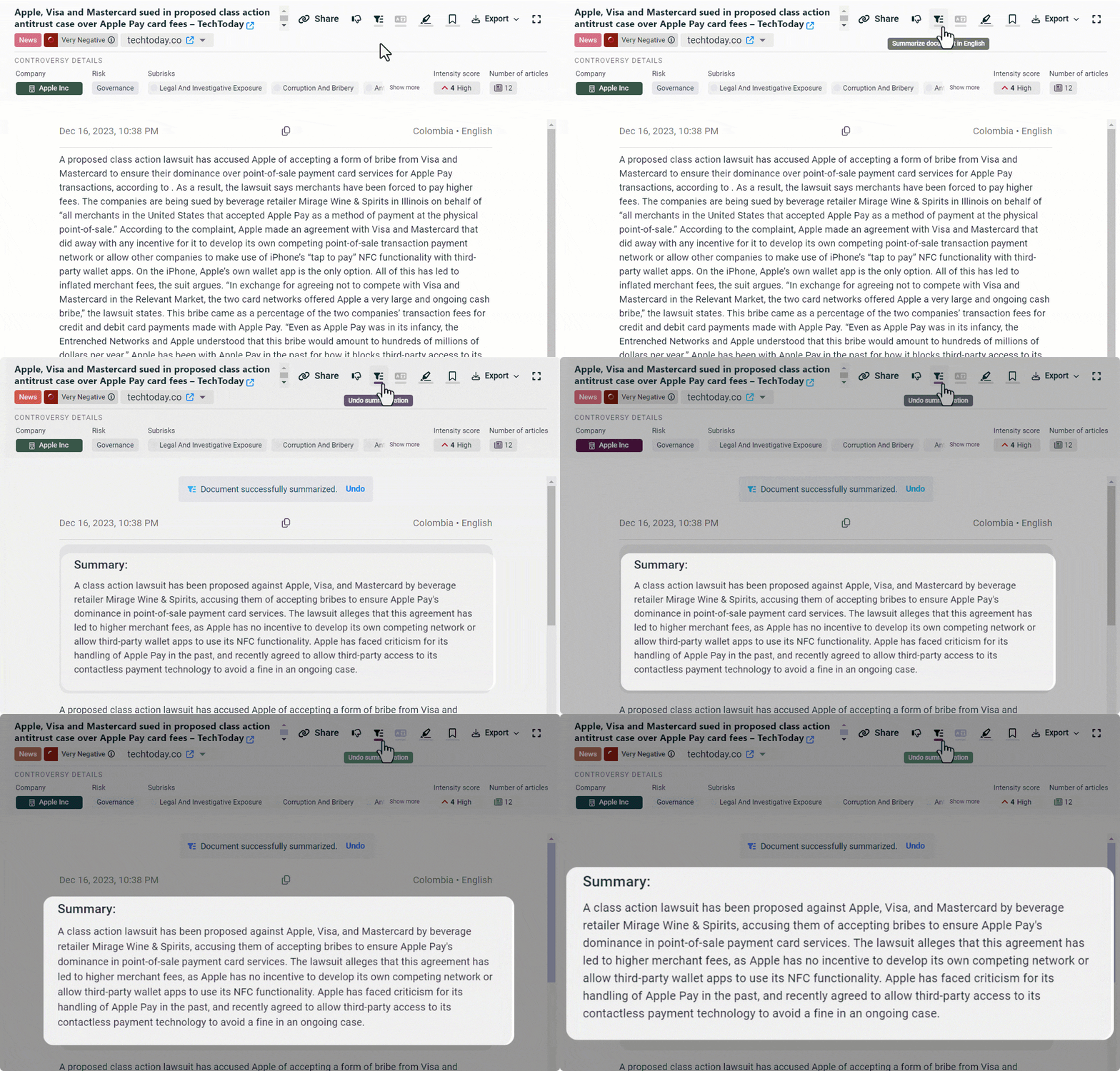
TextReveal’s Risk Assessment module enables deep company and thematic research in multiple languages through on-the-fly keyword searches. Users have full access to articles, sentiment analysis, and trending topics to get a complete understanding of the risks. We’ve even developed an AI Text Summary feature that provides a quick summary of a selected article, saving time and enabling a faster analysis.
In summary, the integration of AI tools and natural language processing technologies is transforming risk management in private equity, particularly for firms dealing with small, private companies. By leveraging these advanced tools, private equity firms can enhance their due diligence processes, better monitor risks and controversies, and ultimately make more informed investment decisions that lead to higher rewards and operational efficiency.
Reach out to SESAMm
TextReveal's web data analysis of over five million public and private companies is essential for keeping tabs on ESG investment risks. To learn more about how you can analyze web data or request a demo, contact one of our representatives.
Luxury brand Loro Piana, owned by LVMH, has been placed under a one-year judicial administration by an Italian court after a labor exploitation investigation uncovered serious abuses within its supply chain. According to Reuters, workers at a subcontracted factory were paid as little as €4 per hour and subjected to 90-hour workweeks, often living inside the premises. One worker was reportedly attacked after requesting unpaid wages, requiring 45 days of medical treatment. The case highlights the growing scrutiny of labor conditions in Italy’s fashion manufacturing sector, especially among high-end labels. Loro Piana is now the fifth luxury brand, joining Dior, Armani, Valentino, and Alviero Martini, under court supervision due to supplier-related violations.
A Complicated Web of Subcontracting
What sets this case apart is the complexity of the supply chain. Loro Piana did not contract directly with the workshop where the violations occurred. Instead, it worked through two front companies, both of which lacked actual manufacturing capacity. These intermediaries then subcontracted the work to a network of unregistered or poorly monitored producers. All the firms involved in this chain have been swept up in the investigation.
This multi-tier outsourcing structure made it difficult to detect violations and raises questions about accountability. The Milan court noted that Loro Piana "culpably failed" to supervise its partners, prioritizing cost and output over due diligence.
Why It Matters
Luxury brands trade on trust and exclusivity. Consumers expect not just quality, but integrity, especially regarding sourcing. When serious labor violations are revealed, the reputational risks extend far beyond one product or supplier. They affect brand credibility, investor confidence, and long-term consumer loyalty.
This incident also reinforces a trend: regulators are increasingly willing to intervene when voluntary monitoring fails. Judicial administration isn’t just symbolic; it’s a legally binding oversight mechanism aimed at forcing systemic change.
The Path Forward
For fashion brands, this is a clear signal that supply chain governance must go deeper. That includes mapping indirect suppliers, improving transparency around subcontracting, and enforcing ethical standards at every level. Simply trusting the next link in the chain is no longer enough.
In a sector built on craftsmanship and heritage, safeguarding those values behind the scenes is just as important as what ends up on the runway.
SESAMm’s AI Technology Reveals ESG Insights
Discover unparalleled insights into ESG controversies, risks, and opportunities across industries. Learn more about how SESAMm can help you analyze millions of private and public companies using AI-powered text analysis tools.
Stay ahead with the latest in ESG and AI intelligence
Join our mailing list to receive new reports, event invites, and updates from SESAMm directly to your inbox.











.png)