Summer 2024 Highlights: SESAMm’s Latest on ESG, AI Innovations, and Industry Recognition
September 10, 2024
•
5 mins read
As the summer draws to a close, it's the perfect time to reflect on the exciting developments we've had at SESAMm over the past few months. From insightful webinars and ebooks to new product features and industry recognitions, we've been busy making strides in the world of ESG and AI. Before we transition into the busier months ahead, take a moment to catch up on our latest updates and explore the resources we've curated for you. Whether you're lounging by the pool or gearing up for the fall, we've got something that will pique your interest.
This ebook provides an in-depth look at the EU's Corporate Sustainability Due Diligence Directive, offering practical insights for businesses to align with new regulatory expectations on sustainability.
Explore how ESG controversies differ between public and private companies. This study highlights key areas where private firms lag in transparency and governance compared to their public counterparts.
This webinar dives deeper into the findings from our comparative study, featuring expert opinions on addressing ESG challenges in different sectors.
Product Features
Heatmap: ESG Controversy Risk Exposure
Introducing our new ESG Controversy Risk Exposure Heatmap, which provides an easy, visual way to assess an entity’s reputational risk profile. With a comprehensive overview of ESG risks, you can quickly zero in on areas of concern and prioritize your next steps. Test it out for yourself with a free trial.
Text Summarization: Efficiently Identify ESG Risks
Our new Text Summary feature allows you to quickly get to the heart of the matter by creating on-the-fly summaries of news articles and documents with just the click of a button. Ideal for those needing to swiftly assess ESG-related risks.
This article highlights real-world applications of AI in detecting greenwashing, showcasing how companies are leveraging technology to maintain credibility.
Join us as we examine AI's capabilities compared to traditional risk management tools. Our webinar on September 25 will highlight how AI more efficiently detects and predicts ESG controversies. We will also showcase a detailed case study on the Boeing scandal, providing invaluable insights into AI's predictive prowess within the aerospace industry.
Events in September Here are some events we’ll be attending in September. Here is a chance for us to catch up and meet in person. Check them out, and let’s meet soon. Click here for more details.
Reach out to SESAMm
TextReveal’s web data analysis of over five million public and private companies is essential for keeping tabs on ESG investment risks. To learn more about how you can analyze web data or to request a demo, reach out to one of our representatives.
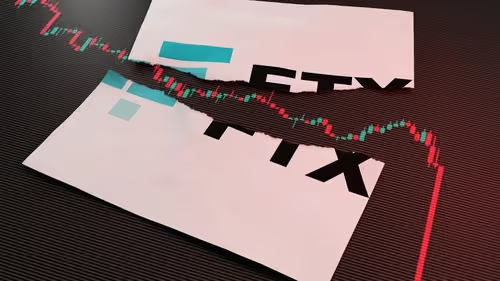
November 11, 2022, FTX, a $32 billion cryptocurrency exchange company that many believed would “change the world,” filed for bankruptcy. This news shook the crypto and financial communities, compelling many to debate the future of the crypto market and its platforms.
How did FTX collapse?
You could say that FTX’s collapse began before the news broke, but here’s a summary of events as The New York Times and ABC News details:
Breaking news
In early November, CoinDesk, a crypto publication, broke the news on a leaked document from FTX. The balance sheet showed that the hedge fund run by Sam Bankman-Fried (SBF), Alameda Research, held a substantial amount of FTT tokens. In short, SBF had set up Alameda (his trading firm) and FTX (his exchange firm) in such a way that if one unit experienced trouble, such as dropping cryptocurrency prices, the other experienced it, too.
First domino falls
By the way, FTT is used for various functions, including traders’ payment of operation fees. Also, by the way, Changpeng Zhao, Binance’s Chief Executive, sold his stake in FTX to SBF in 2021, partially with FTT. So, “due to recent revelations,” Binance (Zhao) announced on November 6, 2022, that it would sell its FTT tokens.
Other dominos follow
Traders responded; they hurried to pull funds out of FTX out of fear, and FTT’s price fell. Meanwhile, FTX processed withdrawal requests over three days, amounting to an estimated $6 billion. The liquidity crunch was upon it.
Then, on November 8, Binance said it would bail out FTX. But on November 9, Binance backtracked and announced in a Tweet that it would not “as a result of corporate due diligence,” while also citing regulatory investigations and reports of mishandled funds.
Things get worse
The next day, November 10, the Securities Commission of the Bahamas froze FTX’s assets, citing the public statement about potentially “mishandled” and “mismanaged” customer funds. On November 11, FTX filed for Chapter 11 bankruptcy protections, and SBF resigned as CEO. John J. Ray III—famously known as the CEO who headed the infamously known energy company, Enron, through its collapse in the 2000s—replaced SBF on November 17.
Fallout
Today, FTX faces federal investigation for securities laws violations based on a report by The Wall Street Journal regarding FTX lending customer deposits to Alameda Research for liabilities, of which the company’s top executives were aware. Investors have suffered loss, traders have suffered loss, and the greater crypto community and regulators are asking questions.
FTX and SBF web data analysis
News about FTX’s collapse generated tons of web data for us to scour. With this data, here’s what we aimed to find out:
How did the public web react to FTX’s collapse?
Could we have seen red flags before the news broke?
What was FTX’s collapse’s effect on the cryptocurrency market’s sentiment?
Is it possible to evaluate cryptocurrency exchange companies’ ESG risks and opportunities?
Was FTX’s collapse unprecedented? If not, what does web data tell us about that?
FTX and Sam Bankman-Fried mentions analysis
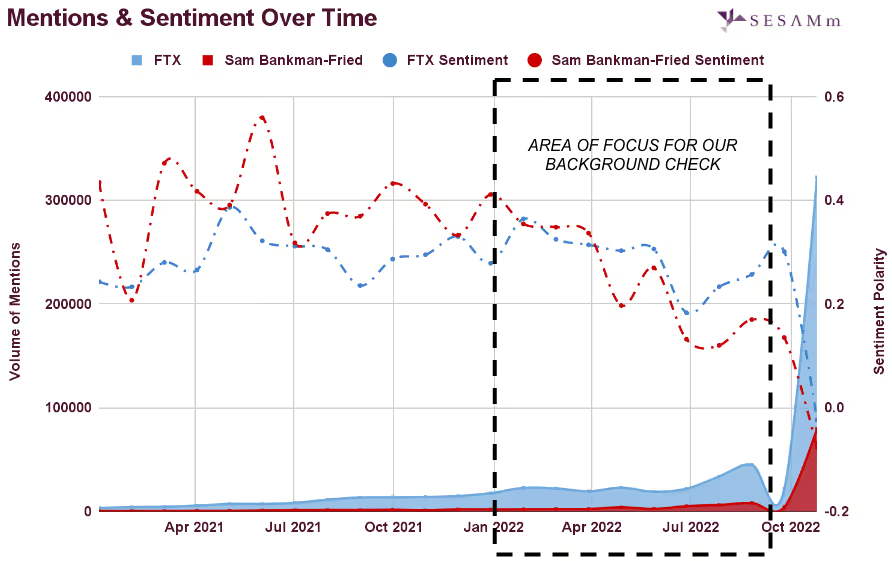
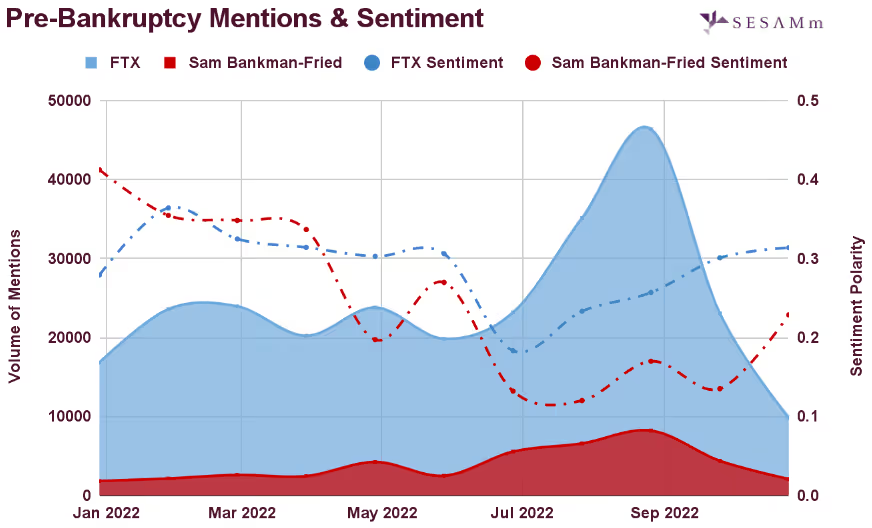
Web public sentiment for FTX and SBF was consistently positive until Q1 of 2022. As mentions volume increased, their sentiment polarity decreased (Figure 1). The mentions spike for both in November when CoinDesk broke the news. Likewise, polarity dips into the negative range for both.
Definition: Polarity represents the aggregate of positive and negative sentiments (opinions or reviews) on a company. A 0 score means there is as much positive as negative sentiment expressed. The dotted and dashed lines represent sentiment in the following charts.
Figure 1: FTX and SBF mentions and sentiment over time.
Looking closer at Q1 (Figure 2), we find that mentions affecting sentiment increased for FTX and SBF during this period. What are the mentions about, and why did they affect polarity negatively?
Figure 2: FTX and SBF pre-bankruptcy mentions and sentiment.
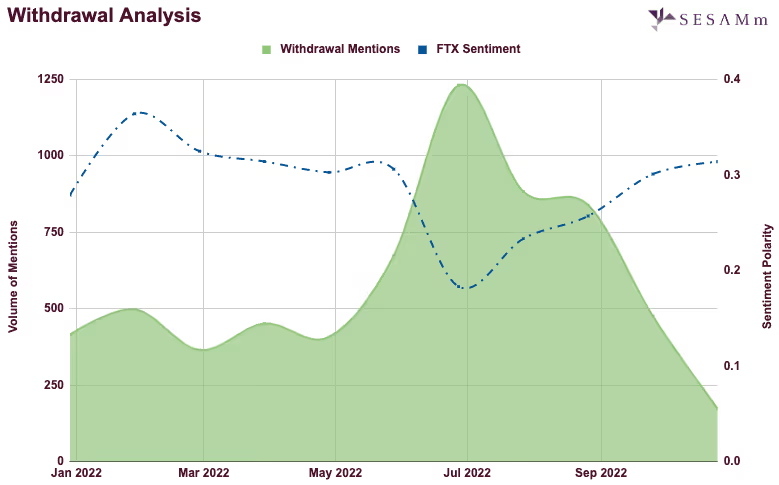
It turns out that SBF is linked to other keywords—we call these co-mentions—and between January 2022 and November 2022, SBF/withdrawal co-mentions (Figure 3) spiked in July when SBF defended Terra Luna’s founder, who was accused of peddling a Ponzi scheme.
Figure 3: FTX and SBF withdrawal co-mentions.
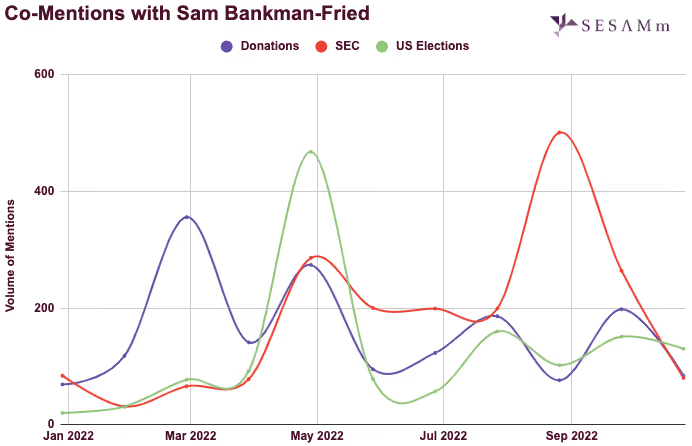
If withdrawal co-mentions brought up possible reasons why SBF and FTX experienced dips in sentiment, what other co-mentions could give us more insight? How about donations, SEC, and U.S. elections?
Figure 4: Donations, SEC, and U.S. elections co-mentions with SBF.
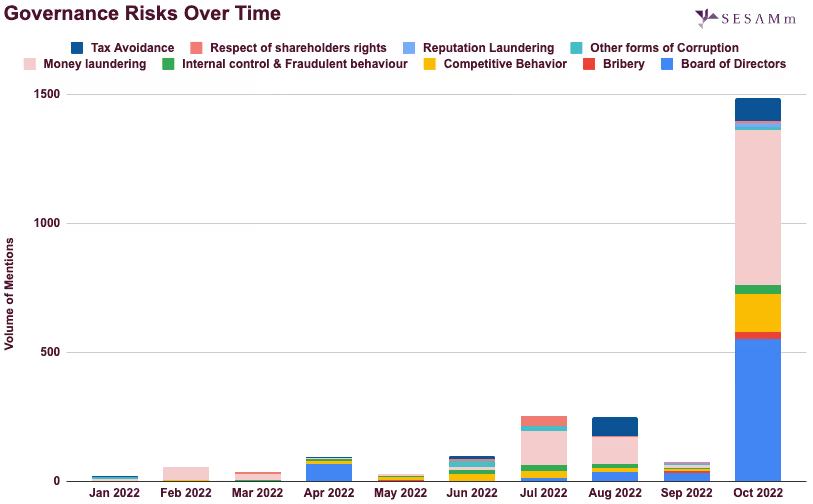
Corporate governance stands out when evaluating SBF’s ESG risks, but his social risks are nothing to ignore either.
Figure 5: SBF governance risks over time.
Two areas of governance risks to note are money laundering and board of directors (Figure 5). Money laundering as a co-mention has been an issue as early as February 2022, but it became a bigger issue in October. These risks may be popping up due to allegations of manipulating the price of the APT token and a securities violations probe.
If you’ve read this far, you by now get an impression of FTX and SBF, from mention volume to sentiment analysis and ESG risk. But how did FTX’s collapse affect the overall cryptocurrency market? Let’s find out.
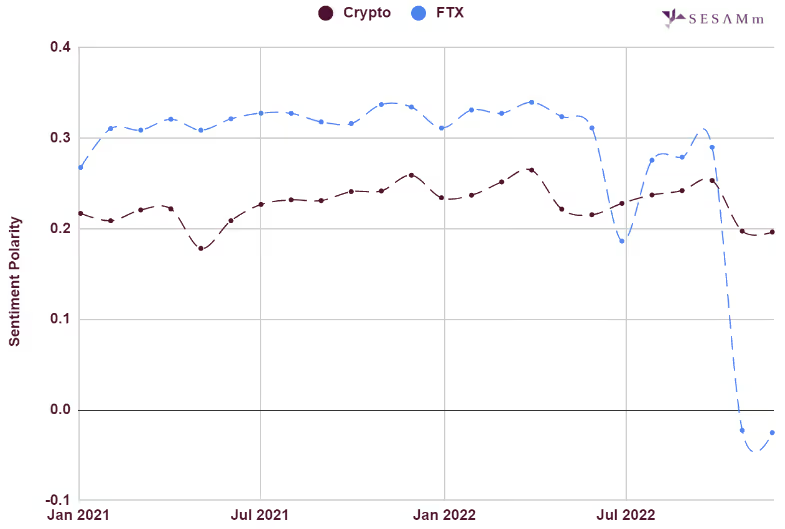
In comparing the sentiment polarities for FTX and the crypto market from January 2021 through November 2022 (Figure 6), the sentiment for crypto remains relatively steady despite FTX’s sentiment taking a hit.
Figure 6: Effect of FTX collapse on the crypto market.
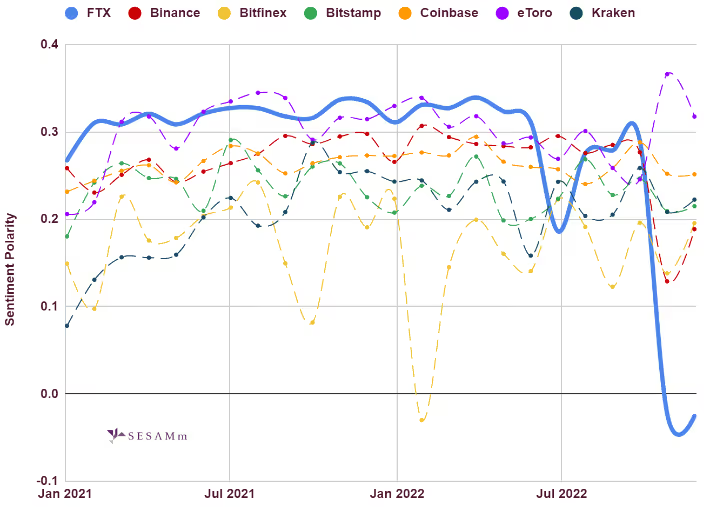
When comparing other cryptocurrency exchanges to FTX (Figure 7), sentiment polarity for them is hardly affected, except Binance, because of its connection with FTX. Oddly enough, eToro experienced a boost in sentiment, possibly because of its core values around openness and transparency, the fact that they’ve been around since 2007, its early compliance with regulations (i.e., AMF, FCA, ASIC, BaFin, and ACPR), and that it also proposes investing in stocks and ETFs, a contrast to most other crypto market exchanges. Bitfinex has its own issues, so its dip in sentiment might not be correlated.
Figure 7: FTX sentiment comparison across competitors.
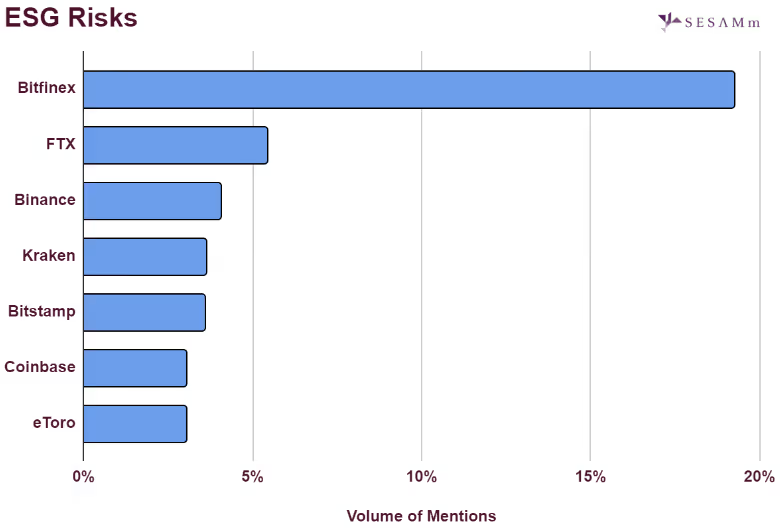
At this time, FTX’s ESG risks based on the mention volume are only surpassed by Bitfinex (Figure 8), which its risks are based on many other reasons we won’t get into in this article.
Figure 8: FTX and competitors ESG risks by mention volume.
Centralized vs. decentralized crypto exchange platforms
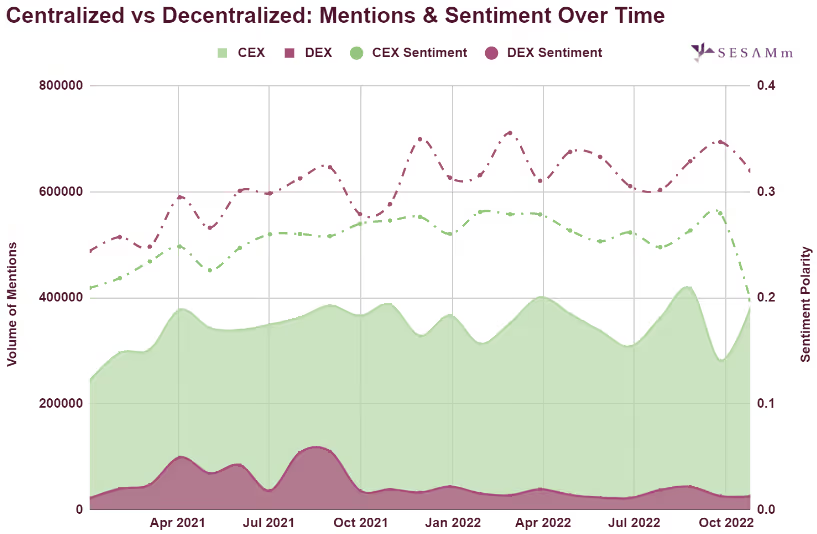
FTX’s collapse also affected sentiment around the centralized vs. decentralized debate. Since October 2022, sentiment for centralized exchange platforms, such as FTX and its competitors, has fallen (Figure 9).
Figure 9: Centralized vs. decentralized mentions and sentiment over time.
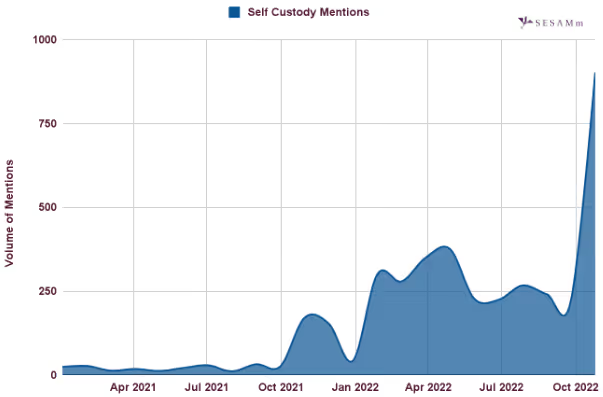
Likewise, the mention volume for self-custody has more than doubled in the last couple of months (Figure 10). Although centralized platforms offer quicker and easier access to crypto trading, traders are considering complex but more secure options such as crypto wallets and keys because, like banks, centralized exchanges can do what they will with cryptocurrency while it’s in their possession. With self-custody, owners are in control.
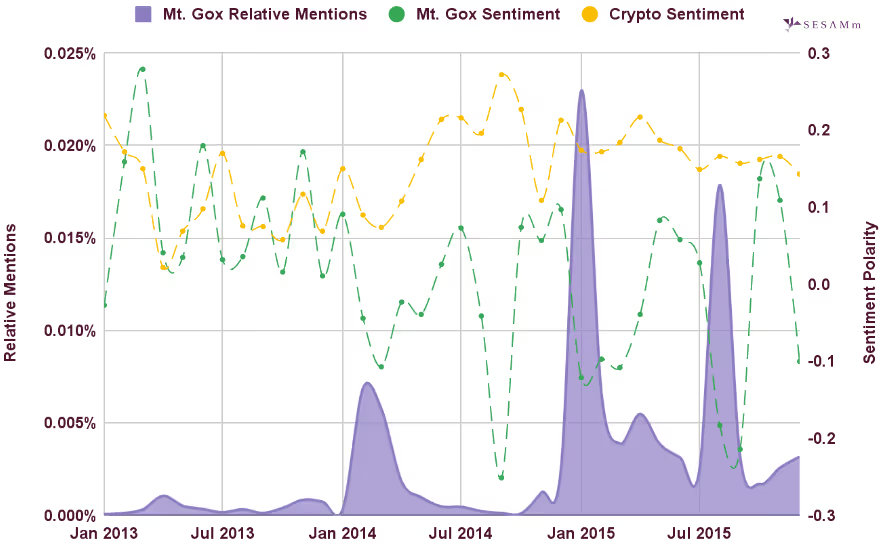
Believe it or not, FTX was not the first crypto exchange to collapse. In 2014, Mt. Gox—the biggest crypto exchange at the time—lost half a billion dollars worth of Bitcoin due to a hack. How did Mt. Gox’s collapse affect sentiment for the crypto market then? The short answer is: It didn’t.
Figure 11 shows that while Mt. Gox’s sentiment polarity fluctuated, even reaching negative territories, the sentiment for the crypto market remained relatively stable and positive.
Figure 11: Mt. Gox and crypto sentiment comparison.
Is FTX’s collapse a warning for investors?
Our analysis is that investors should treat cryptocurrency exchanges like any investment opportunity. Do your due diligence and monitor your portfolio with tools like SESAMm’s TextReveal®.
As for the cryptocurrency market, data shows that sentiment for it remains level and positive. We speculate that cryptocurrency and centralized exchanges are here to stay. However, based on historical data and current news, we suspect conversations about crypto regulations to increase.
Reach out to SESAMm
For a deeper analysis of FTX’s collapse and access to all charts and supportive-article links, reach out to a representative today.
COP30 has just begun in Belém, Brazil. Every year, the Conference of the Parties (COP) serves as the world’s central stage for climate diplomacy, where governments, scientists, and civil society gather to decide how to respond to the global climate emergency. Over the decades, these meetings have shaped major milestones, from the Kyoto Protocol to the Paris Agreement. Yet behind the speeches and pledges, questions persist: how much progress is being made on the ground, and how inclusive are these negotiations in practice?
As countries meet again to assess their collective efforts, looking back at the most recent COPs offers a perspective on how politics, accountability, and competing interests continue to influence the global climate agenda.
What Is the COP?
The Conference of the Parties (COP) is the annual United Nations summit that brings together the 198 signatories to the 1992 UN Framework Convention on Climate Change (UNFCCC). Its purpose is to coordinate international action on climate change through negotiation, progress assessment, and new commitments to reduce greenhouse gas emissions.
COPs are usually held in November or December and last about two weeks. The first took place in 1995 in Berlin, and the tradition has continued ever since. COP27 was hosted by Egypt in 2022, COP28 by the United Arab Emirates in 2023, and COP29 by Azerbaijan in 2024. This year, COP30 marks Brazil’s turn to host the event in the Amazonian city of Belém.
Over the years, COPs have produced landmark outcomes, from the Kyoto Protocol (1997) to the Paris Agreement (2015). More recent debates have focused on climate finance, adaptation, and the global transition away from fossil fuels. Yet, as recent conferences show, progress often comes with friction, delays, and controversy.
The COP Controversies Over the Years
COP27 (2022) - Egypt
Held in Sharm el-Sheikh, COP27 centered on the question of climate justice. Developing nations demanded compensation for loss and damage caused by climate impacts that they did little to create. Therefore, the creation of a Loss and Damage Fund was a landmark step, though details on financing and governance were deferred.
Egypt’s hosting of the summit drew criticism over restrictions on civil society. Amnesty International reported hundreds of arrests before the event, including activists detained for online content. Tight surveillance and limited protest spaces highlighted how political control intersected with the climate agenda.
Meanwhile, energy security concerns following the war in Ukraine exposed inconsistencies in global climate policy. Some European nations resumed coal use or sought new gas projects in Africa, while methane leaks from natural gas infrastructure were found to be worse than estimated. These developments raised questions about whether short-term energy strategies were undermining long-term climate goals.
COP28 (2023) - United Arab Emirates
The 2023 summit in Dubai was among the most debated in COP history. The appointment of Sultan Al Jaber, CEO of the Abu Dhabi National Oil Company, as COP president drew immediate criticism over conflicts of interest. Al Jaber’s comments, suggesting there was “no science” supporting a fossil fuel phase-out, only deepened the controversy.
Leaked letters from OPEC revealed coordinated lobbying to block references to phasing out fossil fuels in the final text. Despite this, over 100 countries advocated for clear language on ending fossil fuel use. The resulting “UAE Consensus” included the phrase “transitioning away from fossil fuels,” the first such mention in COP history. However, critics noted that the wording allowed broad interpretation and loopholes for continued production through “abatement” and carbon capture.
The summit also drew scrutiny for restrictions on activism. Human Rights Watch documented limits on protests, surveillance of delegates, and constraints on speech. Still, COP28 produced incremental steps on renewable energy commitments and adaptation finance, even as it highlighted the influence of the fossil fuel industry on global negotiations.
COP29 (2024) - Azerbaijan
In Baku, COP29 took place under similar scrutiny. Azerbaijan’s record on press freedom and civil rights was a major concern, with several journalists and activists arrested in the months before the event. Human rights advocate Anar Mammadli and economist Gubad Ibadoghlu were among those detained on politically motivated charges.
The negotiations were dominated by debates over climate finance. Wealthy countries announced a target of $300 billion annually by 2035, largely relying on private capital and multilateral banks. Developing nations argued that the proposal lacked direct grant funding and risked increasing debt burdens. Observers reported confusion and frustration over the agreement’s final approval, with some delegations absent when it was gaveled through.
COP29 concluded with calls for greater transparency, inclusivity, and consistency in how future summits are hosted and managed.
Patterns and Lessons
Across COP27, COP28, and COP29, several common threads emerge. Each conference underscored both the urgency of global climate action and the difficulties of collective decision-making. The creation of new financial mechanisms and the first explicit reference to moving away from fossil fuels were significant steps. Still, they came alongside persistent divisions over fairness, responsibility, and implementation.
A recurring criticism has been greenwashing: the gap between rhetoric and reality. Host countries often present themselves as champions of sustainability while remaining heavily dependent on fossil fuels. At the same time, the presence of record numbers of industry lobbyists, particularly from oil and gas companies, has raised concerns about the balance of influence in climate negotiations.
These issues point to a broader tension: how to ensure that the COP process remains a platform for genuine progress rather than symbolic gestures. Many observers argue that transparency, stronger accountability mechanisms, and better inclusion of civil society are essential to rebuilding trust in the process.
Conclusion
As COP30 unfolds in Brazil, the focus is again on implementation and credibility. The last three conferences demonstrated how progress can coexist with controversy, and how global ambition must be matched by local action and political will.
While the COP framework remains the cornerstone of international climate cooperation, its effectiveness depends on whether commitments are translated into tangible outcomes. The coming days in Belém will show whether lessons from past conferences can help turn dialogue into decisive progress.
Reach out to SESAMm
TextReveal’s web data analysis of over five million public and private companies is essential for keeping tabs on ESG investment risks. To learn more about how you can analyze web data or to request a demo, reach out to one of our representatives.
SESAMm, a leading provider of Big Data and Artificial Intelligence technology for investment managers, has been recognized with the Best of Show Award at Finovate Europe 2022, which took place on March 22nd and 23rd in London. The award was granted to SESAMm following a demonstration conferred by CEO and Co-founder Sylvain Forté, during which he showcased the company's marquee product TextReveal®.
"Finovate Europe represents a unique opportunity for best-in-class Fintech companies to showcase their innovations in front of leading institutions. It was great to demonstrate our product in front of an elite audience and win the Best of Show award." Said Sylvain Forté, CEO of SESAMm,"We are proud to say that this event was a big success for SESAMm, judging by the level of interest in our technology and its applications to the current ESG topic."
SESAMm is a fintech company that specializes in Big Data and Artificial Intelligence. Through its product, TextReveal®, the company provides analytics and investment signals to finance and corporate professionals by analyzing over 17 billion web articles and messages using natural language processing and machine learning. TextReveal® is a ready-to-use alternative data platform; its NLP (Natural Language Processing) powered engine provides daily sentiment and ESG data mapped to public and private companies to fuel investment strategies.
Finovate Europe, one of the most awaited annual events, sheds light on innovative fintech startups and helps them gain more recognition. It brings together over 1,000 senior finance and tech experts, including “demoers” and insightful speakers.
"We love to see companies like SESAMm join us at Finovate demonstrating their cutting-edge technologies. It really underscores our commitment to provide a platform to promote innovative startups in the financial ecosystem." Said Greg Palmer, VP of Finovate. "Congrats to the SESAMm team for winning Best of Show, it’s clear they really resonated with our audience!"
SESAMm's successful appearance at Finovate Europe once more confirms the great reception the company is getting in the industry, as just a few weeks ago, it was announced that SESAMm was the recipient of the HFM award for Best use of Artificial Intelligence.
TextReveal® Streams emphasizes SESAMm's goal to provide future investors with the accurate and necessary data to make decisions accordingly. Find out more here.
About SESAMm:
SESAMm is a leading company in alternative data and artificial intelligence, delivering global investment firms and corporates data-driven insight and investment analytics. It owns a proprietary 13 years historical data lake containing over 17 billion articles publicly sourced from more than 4 million sources (blogs, forums, social networks, etc.). This represents 10 to 100 times more information than that of our competitors.
Stay ahead with the latest in ESG and AI intelligence
Join our mailing list to receive new reports, event invites, and updates from SESAMm directly to your inbox.



%2520A%2520Comprehensive%2520Guide.avif)
.gif)
.gif)




.avif)


.png)