SESAMm Launches Controversy Exposure Score: A New Era for ESG Risk Analysis
September 12, 2024
•
5 mins read
We are excited to announce the launch of SESAMm’s proprietary Controversy Exposure Score (CES), a new score designed to transform how ESG and finance professionals assess risks. The CES offers a dynamic, real-time view of a company's exposure to ESG controversies, enabling fast, informed decision-making.
What is the Controversy Exposure Score (CES)?
The CES is a continuously updated score ranging from 1 to 100, reflecting a company or project's evolving exposure to ESG controversies. Leveraging SESAMm’s proprietary Intensity and Volume Scores, the CES captures both the severity and frequency of ESG incidents, allowing stakeholders to monitor and understand risks as they develop. Below, we’ve put together an example demonstrating how the CES for Renault compares to Stellantis based on their respective ESG controversies. As we see in the chart below, Renault has had fewer high–intensity events, which results in a lower, more stable CES compared to Stellantis.
Renault CES
Stellantis CES
How Does It Work?
The CES is powered by state-of-the-art Large Language Models (LLMs) that filter and analyze content from our data lake containing over 25 billion articles. Two main components impact the score’s value:
Intensity Score: Measures the severity of each ESG incident, considering its impact on a company’s reputational, stakeholder, financial, and legal standing. This score is derived from a Large Language Model (LLM) fine-tuned by SESAMm’s experts and trained on thousands of humanly annotated events.
Volume Score: Assesses the number of articles associated with an event, calculated using a short-term rolling window. To ensure accuracy, the Volume Score is normalized against the average article volume concerning the company and relevant ESG topics over the past year, reducing potential bias.
Track ESG controversy trends: Evaluate how a company’s risk exposure has evolved. The CES is updated daily, ensuring that users have the most current data at their fingertips.
Benchmark companies against their peers: Compare a company’s risk exposure to its peers, providing a comprehensive view of its relative risk.
Ready to Transform Your ESG Analysis?
For more information on how the Controversy Exposure Score can help you make smarter, data-driven decisions and to see it in action, request a demo.
Reach out to SESAMm
TextReveal’s web data analysis of over five million public and private companies is essential for keeping tabs on ESG investment risks. To learn more about how you can analyze web data or to request a demo, reach out to one of our representatives.
As 2024 comes to a close, I’m proud to reflect on SESAMm’s achievements and energized by the opportunities that lie ahead. This year has been a milestone for our growth, partnerships, and technological advancements, setting a strong foundation to tackle the challenges and embrace the possibilities of 2025.
Looking Back on 2024: Key Achievements
Strengthening Client Partnerships and Expanding Our Reach
This year, SESAMm welcomed an impressive roster of new clients, in particular working more closely with LPs such as Swen Capital, banks, and asset managers such as Natixis, alongside numerous mid-market asset managers and private equity funds. These organizations are turning to SESAMm for more control over their ESG data and access to granular controversy insights, reaffirming our role as a trusted partner in sustainable finance. We also launched impactful partnerships with Ramboll, ARX, FinGreen, and CybelAngel, among others, broadening our reach and capabilities.
Building a Stronger Team and Advancing Our Technology
Internally, we strengthened our team with strategic hires, including our first team member in Canada, to better support our clients locally. On the technology front, we achieved significant milestones: introducing new platform features, launching a comprehensive product documentation help page, and reaching the capacity to process nearly 30 billion documents—our largest scale yet.
Adapting to a Dynamic ESG Landscape
Globally, the ESG landscape was marked by notable developments. Europe focused heavily on CSRD compliance, while Asia advanced new ESG mandates and regulations in South Korea, Japan, and Singapore. Despite regulatory shifts in the U.S., SESAMm experienced strong growth in North America, demonstrating our ability to adapt and thrive globally.
Innovating with Generative AI
This year also saw the integration of generative AI into our solutions, reshaping how we deliver value to clients. Risk Reveal, for example, enables automated controversy report generation and real-time insights.
Looking Ahead to 2025: Rising to ESG Challenges
Embracing ESG Challenges
As we close out 2024, the momentum in ESG shows no signs of slowing down. With new regulations like CS3D and evolving global frameworks, companies face mounting demands to monitor not only their investments but also their supply chains while improving transparency across the board. SESAMm remains committed to enhancing its tools to meet these challenges, delivering faster, more actionable insights to corporate and investment clients alike.
Harnessing the Potential of AI
The evolution of AI presents a major opportunity. Advances in generative models will enable us to further increase the scale and quality of our data processing. Our focus will remain on refining interpretation and reporting capabilities, empowering clients to make smarter, data-driven decisions on millions of companies with minimal friction.
The year ahead will undoubtedly bring its share of challenges, but it also holds incredible potential for progress. SESAMm is committed to remaining at the forefront of ESG and AI innovation, helping businesses not only adapt to change but lead it. None of this progress would be possible without the trust and collaboration of our clients, partners, and team members. Thank you for making this year a success. Together, we are shaping the future of finance and sustainability. Here’s to another year of growth, innovation, and positive impact in 2025!
Reach out to SESAMm
TextReveal’s web data analysis of over five million public and private companies is essential for keeping tabs on ESG investment risks. To learn more about how you can analyze web data or to request a demo, reach out to one of our representatives.
Infrastructure is no longer a niche allocation. It sits at the center of energy transition strategies, industrial policy, and long-term portfolio construction. For investors, banks, and insurers, exposure to infrastructure projects also means exposure to complex, evolving ESG and reputational risks.
More than 250,000 infrastructure projects worldwide are monitored on the SESAMm platform. This coverage continues to expand, with new projects added regularly, including in response to client requests.
“Infrastructure projects generate vast amounts of fragmented information across local media, regulatory sources, and public reporting. Our goal is to transform that information into structured intelligence. With more than 250,000 projects covered globally, SESAMm provides investors and financial institutions with the visibility needed to monitor infrastructure risks at scale,” commented Sylvain Forté, CEO & Co-Founder, SESAMm.
A Truly Global View of Infrastructure Risk
SESAMm analyzes sources in more than 100 languages and provides global visibility into infrastructure assets, including in emerging markets and jurisdictions with limited public disclosure. Through multilingual AI analysis, SESAMm monitors projects in their local information environments, detecting controversies, regulatory actions, environmental incidents, corruption cases, and governance failures as they emerge.
Whether a project is located in Europe, Southeast Asia, Sub-Saharan Africa, or Latin America, clients gain access to:
Local-language media monitoring
Structured ESG event detection
Clear visibility into how events evolve over time
Severity and exposure scoring
Infrastructure risk is rarely static. It evolves during permitting, construction, operation, and financing, and SESAMm’s monitoring reflects that reality.
Coverage Across Key Infrastructure Categories
SESAMm’s infrastructure coverage includes a wide range of asset types, such as:
Solar Stations
Airports
Waste Management Facilities
Wind Stations
Dams
Coal Mines
Oil & Gas Plants
Hydropower Stations
Coal Power Stations
Steel Plants
Bioenergy Stations
Nuclear Stations
Coal Terminals
Geothermal Stations
This breadth enables clients to assess risks across both legacy and transition-aligned infrastructure.
Why Infrastructure Monitoring Matters Now
Infrastructure projects concentrate risk. They involve long timelines, large capital commitments, public scrutiny, regulatory complexity, and significant community impact.
For investors and lenders, point-in-time due diligence is no longer sufficient. A project cleared at financial close can face protests, litigation, environmental incidents, corruption allegations, or regulatory breaches years later.
Continuous monitoring is becoming essential for:
Pre-investment screening
Ongoing portfolio oversight
Secondaries transactions
Infrastructure debt underwriting
Insurance risk assessment
Sustainability and SFDR reporting
Our expanded coverage supports these workflows with structured, real-time intelligence.
On-Demand Expansion: Coverage That Grows With You
Beyond the projects already included in the dataset, SESAMm adds new infrastructure assets upon client request. This allows coverage to align directly with a pipeline of acquisition targets, a lender’s financing book, an insurer’s underwriting portfolio, or a fund’s watchlist. Rather than forcing clients to adapt to a fixed database, SESAMm’s infrastructure coverage scales dynamically to meet their needs.
With more than 250,000 assets included, SESAMm delivers one of the most comprehensive and scalable datasets for infrastructure risk monitoring. Together, this expanded infrastructure dataset and SESAMm’s AI reporting capabilities provide financial institutions with a scalable way to identify and monitor risks across infrastructure portfolios worldwide.
With sustainability being imperative, it's essential to examine how public and private companies align with the Sustainable Development Goals (SDGs). This article, leveraging insights from SESAMm's TextReveal, dives into the behaviors of both sectors across industries, exploring their impact on achieving a sustainable future. Join us as we unravel the complexities of corporate contributions to the SDGs, highlighting key differences and challenges public and private entities face in their journey toward sustainability.
What are the 17 Sustainable Development Goals?
The 17 UN SDG objectives, introduced in 2015 with the target of achievement by 2030, are geared towards building a sustainable society. Initially designed for governments, certain companies can contribute significantly to these goals through their products or conduct. However, our focus here will center on identifying behaviors that counter these 17 objectives.
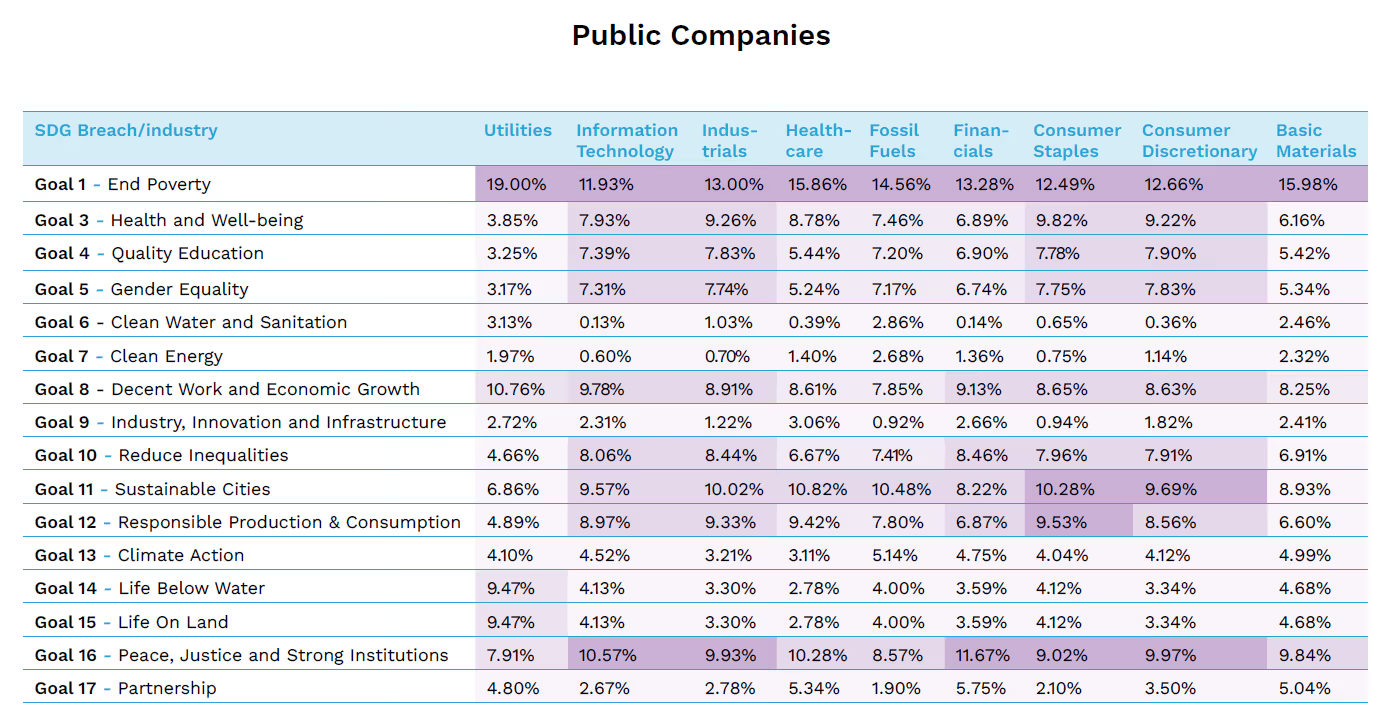
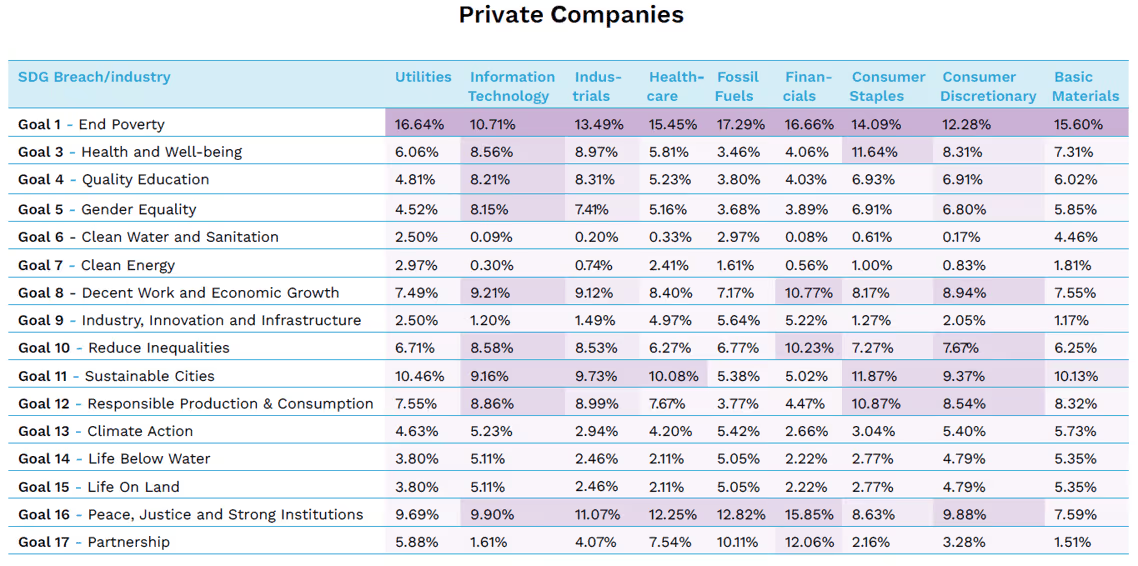
The analysis of Sustainable Development Goal (SDG) adverse behaviors, as identified by SESAMm's TextReveal, offers a comprehensive comparison between public and private companies within various industries. The focus is to discern disparities in SDG behaviors within the same sector and pinpoint the predominant SDG goal breaches in these industries.
Excluding Goal 2 ("End hunger") due to its alignment with state-related initiatives, the analysis concentrates on corporate-impactful goals.
Public and private sectors face challenges in meeting SDGs, particularly Goals 1 ("End poverty") and 16 ("Peace & justice and strong institutions"), with issues in labor rights and governance. However, public companies are more aligned with Goal 8 ("Decent work and economic growth") across industries, facing a range of controversies from biodiversity to management issues. In contrast, private companies focus on Goal 11 ("Sustainable cities"), dealing with climate change and customer relations risks.
Goal 16 ("Peace & justice and strong institutions") is significant in both sectors but particularly in the Financials and Information Technology for public companies and in Financials, Fossil Fuels, and Health Care for private companies. This goal involves human rights, labor rights, human capital, and governance-related controversies.
These findings highlight the profound impact of SDG-related risks on economic growth and stability across various sectors. Industries like Information Technology, Industrials, and Consumer Discretionary exhibit heightened susceptibility to SDG adverse behaviors, underscoring the necessity for vigilant risk management to ensure economic prosperity and security.
Industrial UNGC Use Case
What is the UN Global Compact?
The United Nations Global Compact (UNGC), established in 2000, outlines ten principles across four main pillars: human rights, labor standards, and anti-corruption. These principles are critical in guiding companies toward ethical and responsible behaviors.
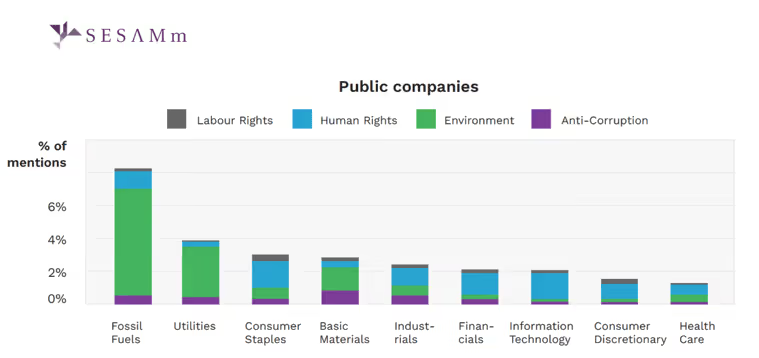
Figure 1: UNGC for public companies.
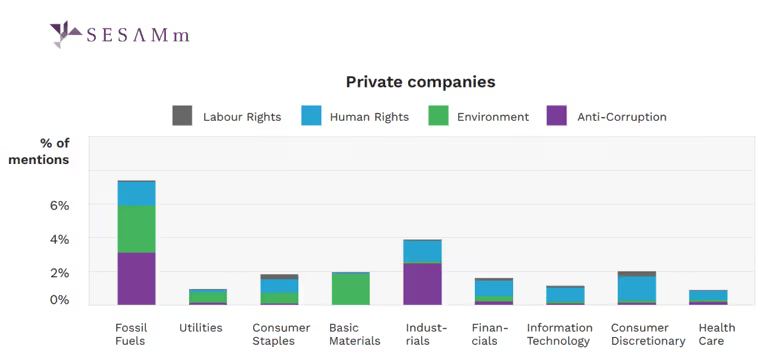
Figure 2: UNGC for private companies.
The analysis reveals distinct patterns in breaches of UNGC principles. Private companies in the industrials and fossil fuel sectors show a notable correlation with anti-corruption breaches, emphasizing the importance of due diligence in these areas. In the fossil fuel industry, public companies primarily breach environmental principles, while private companies show more breaches related to anti-corruption along with environmental concerns.
Private industrial companies also display a significant number of anti-corruption breaches involving various legal challenges. In the consumer staples sector, public companies primarily face human rights breaches, including forced labor and privacy violations. The private consumer discretionary sector also shows a high number of human rights breaches, particularly related to privacy and diversity and inclusion.
Overall, public companies across various sectors tend to have more frequent or severe UNGC breaches compared to private companies. This highlights the different challenges faced by public and private entities in adhering to the UNGC principles.
Conclusion
Significant variations in sustainability strategies emerge when looking at public and private companies through their SDG performances. Public companies prioritize economic growth and grapple with environmental and governance concerns, while private companies focus on creating sustainable cities, addressing climate change, and fulfilling social responsibilities. Both sectors encounter obstacles in eradicating poverty and ensuring justice, highlighting their crucial roles in promoting global sustainability objectives. This analysis underscores the essential proactive approach needed from both public and private entities to tackle sustainability challenges effectively.
Download the full report to discover how different sectors navigate regulatory pressures and sustainability challenges with real-world examples to guide your strategy.
Reach out to SESAMm
TextReveal’s web data analysis of over five million public and private companies is essential for keeping tabs on ESG investment risks. To learn more about how you can analyze web data or to request a demo, reach out to one of our representatives.
Stay ahead with the latest in ESG and AI intelligence
Join our mailing list to receive new reports, event invites, and updates from SESAMm directly to your inbox.






.avif)
.avif)


.png)