
Webinar Replay: Understanding Supply Chain Regulations: The Future Implications of CSDDD
June 5, 2024
•
5 mins read
Today, it's important to understand the complexities of supply chain regulations. This was the main topic of a recent SESAMm webinar, “Understanding Supply Chain Regulations: The Future Implications of CSDDD”, which explored the implications of the Corporate Sustainability Due Diligence Directive (CSDDD) and other important regulatory frameworks that affect global supply chains.
The webinar, led by SESAMm's CEO, Sylvain Forte, and ESG analyst Maha Chihaoui, explored the evolving landscape of ESG frameworks, laws, and regulations that influence supply chain operations. As businesses strive to enhance transparency, accountability, and ethical practices, they face a multitude of challenges and opportunities. The session highlighted how these initiatives could lead to substantial benefits such as environmental conservation, improved social conditions, and strengthened governance structures.
During the webinar, Maha Chihaoui emphasized the shift from non-binding guidelines to binding laws in the regulatory spectrum, signaling a more robust approach to enforcing corporate accountability and responsibility. Sylvain Forte also discussed the importance of moving beyond mere compliance to ensure genuine adherence to ESG principles, advocating for a systematic and continuous evaluation process to ensure businesses act on their promises.
The session also touched on real-life applications and challenges in implementing these frameworks. For example, the discussion included case studies on companies like Shein and Temu, highlighting how regulatory focus on supply chain controversies has increased visibility and accountability.
As regulatory frameworks around supply chains continue to evolve, the dialogue between various stakeholders—regulators, businesses, and the public—becomes crucial. SESAMm's webinar effectively shed light on these critical issues, offering insights and fostering a deeper understanding of the dynamic relationship between ESG initiatives and supply chain management.
Watch the webinar replay now:
Unlock a deeper understanding of supply chain regulations' complexities and future implications.
Paris, France, April 11, 2024 - Expanding its ESG controversy coverage and off-the-shelf solutions, Manaos, a subsidiary of BNP Paribas and a modular investment service platform, has entered into a strategic partnership with SESAMm, a leading authority in ESG controversy data powered by advanced Generative AI. This collaboration marks a milestone in providing comprehensive, AI-powered ESG controversies insights directly to financial institutions and corporate clients.
Through this partnership, Manaos will integrate SESAMm's cutting-edge ESG controversies data into its platform, offering a dedicated dashboard and controversies reports for institutional investors and asset management companies and adding private equity firms to its offering. This integration expands Manaos' coverage of controversies, not just for listed assets but also for private assets, tapping into the world’s largest set of events captured on controversies in over 5 million private and public companies, in addition to providing access to the most granular ESG controversy dataset in the world.
Sylvain Forté, CEO & Co-founder of SESAMm, highlighted the importance of the partnership, stating, "At SESAMm, we're committed to delivering transparent and comprehensive ESG controversy data, providing essential insights for our financial and corporate clients. By partnering with Manaos, we are not only expanding our reach but also empowering financial institutions to seamlessly integrate ESG considerations into their investment strategies."
This strategic partnership between Manaos and SESAMm signifies a forward leap in integrating ESG considerations into investment strategies, offering unprecedented access to sophisticated ESG controversy insights for the financial industry.
Benoit Guibourg, Head of Product of Manaos, added: "We're thrilled to partner with SESAMm, a renowned expert in ESG controversy analysis leveraging the power of AI. Thanks to this collaboration, Manaos aims to provide an extensive offer on ESG controversies and leverage the platform to incorporate comprehensive ESG reputational insights in custom or ready-to-use dashboards and reports. SESAMm's expertise extends our ability to guide clients through the complexities of ESG considerations, marking a significant milestone in our mission towards sustainable investing. Furthermore, we are eager to work with SESAMm to unlock the power of their extensive coverage of the private world and provide ready-to-use solutions for our clients."
SESAMm is a global leader in ESG controversy data, using advanced Generative AI. It automates monitoring and due diligence on public and private assets. SESAMm provides coverage for more than 5 million companies in multiple languages. SESAMm works with top international firms such as Carlyle, Warburg, Natixis, RBI, Fitch, and Oddo.
About Manaos:
Manaos, a technology subsidiary of BNP Paribas, powers an all-in-one platform that connects the traditional information systems of institutional investors and asset management companies with carefully selected rating agencies and fintechs to manage all their investment services seamlessly. In practice, the Manaos platform enables investors to collect their fund compositions from their asset managers, while standardising portfolio data and allowing for asset-level portfolio look-through. From there, Manaos empowers asset managers and asset owners to test and measure their ESG investments performance by connecting their portfolio data to a range of over 20 best-of-breed ESG data providers (including MSCI, S&P Sustainable 1, Morningstar Sustainalytics, Moody’s and ISS ESG). Once enriched with third-party data, Manaos offers flexible, multimodal portfolio data extraction along with seamless data visualisation and dashboards features. Finally, Manaos reporting solutions help investors with the production of EETs (European ESG Template), SFDR PAI Statements, TCFD, LEC Art.29, Taxonomy and SDR regulatory reports, client ESG reports and more. For more information, visit www.manaos.com
Globally, ethics and sustainability are important, but the retail industry faces intense scrutiny over supply chain integrity. This spotlight shines on SHEIN and TEMU, two giants in the fast fashion and e-commerce sectors, known for their vast reach yet marred by controversies around labor practices and environmental impacts. This article explores their supply chain strategies, examining how current and emerging legislation, like the CSDDD initiative, aims to tackle the ethical dilemmas plaguing global retail. Through a comparison of SHEIN and TEMU, we assess the effectiveness of regulatory frameworks in addressing these critical issues. By analyzing their ESG controversies and comparing their responses, we assess how well current and future legislation, particularly the CSDDD initiative, addresses ethical issues in global supply chains.
Specialized Retail: The Case of SHEIN and TEMU
SHEIN and TEMU are compelling use cases due to their past controversies and the focus on their supply chain practices. Both companies have come under scrutiny for their labor practices, environmental impacts, and ethical issues, making them ideal subjects for analysis. By studying their supply chain challenges, we aim to assess the effectiveness of current legislation and predict the potential impact of future regulatory frameworks, particularly in the context of the CSDDD initiative.
While both companies operate with a similar business model, SHEIN is an established player entangled in numerous supply chain controversies. On the other hand, TEMU, a newcomer since 2022, faces similar issues. Comparing them helps us evaluate the effectiveness of existing supply chain legislation and determine whether increased regulatory scrutiny has improved compliance or merely raised awareness of these controversies within the industry.
Note:
Size bias mitigation:
We normalized the data for both companies to ensure an equal basis of comparison, accommodating the difference in operational history—SHEIN since 2008 and TEMU since 2022— to eliminate discrepancies in web attention.
Risk analysis:
It’s worth noting that the figures presented here specifically relate to supply chain risks, as that is the primary focus of our analysis.
Examining Supply Chain Controversies
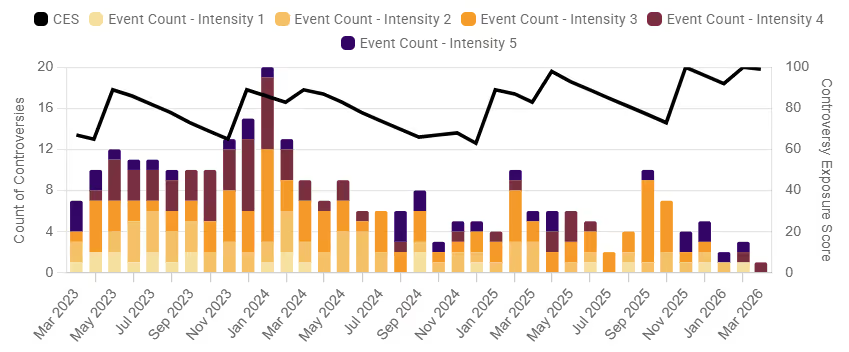
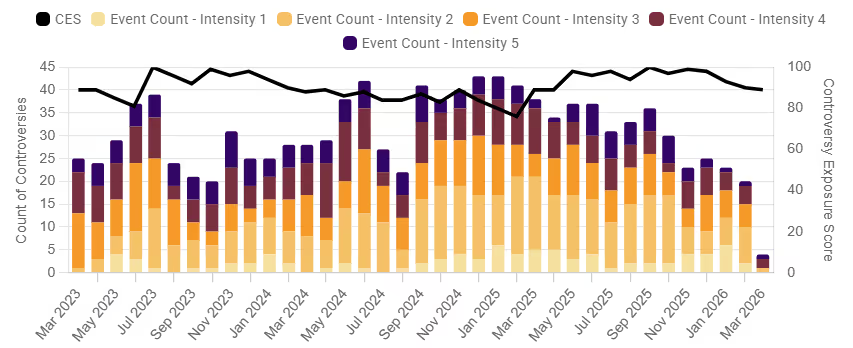
We analyzed ESG risks in the supply chains of SHEIN and TEMU over the past four years, adjusting data volumes for comparative analysis. SHEIN's supply chain risks have significantly increased since 2021, peaking in 2022 and continuing to rise in 2023, reflecting a growing online focus on its issues. Meanwhile, TEMU, despite only being established in 2022, has quickly come under intense scrutiny. The company faces frequent criticism for its supply chain practices, including condemnations for inaction and ongoing human rights violations.
Examining Social Sub-risks
In our analysis of social risks within the supply chains of TEMU and SHEIN, we discovered that fundamental human rights and labor rights are the most and second most prevalent issues, respectively. Notably, despite TEMU's more recent establishment compared to SHEIN, its supply chain has a relatively higher proportion of human rights controversies.
Both companies have faced serious allegations related to their supply chain practices. TEMU and SHEIN are scrutinized for using Chinese cotton potentially linked to slave labor, with insufficient efforts to mitigate forced labor risks. Allegations include child slavery, privacy issues related to sharing user data, and environmental neglect, including the use of carcinogens in products. Despite their efforts to boost their public image through aggressive marketing and influencer engagements, both companies have been criticized for their approach to environmental responsibility and labor practices.
Political calls for investigations into the use of Uyghur slave labor in both companies underscore their ethical challenges. Neither company has shown rigorous compliance with anti-forced labor laws, lacking stringent programs to audit supplier compliance. This highlights significant gaps in their corporate responsibility efforts.
It's evident that social risks, particularly human rights breaches and labor rights controversies, have received significantly more attention than environmental risks. Despite the severity of environmental events, they represent a lower percentage in comparison. This highlights the prioritization of addressing social issues within these companies' operations.
SHEIN experiences extensive scrutiny, leading to a wealth of data on its practices. Conversely, TEMU, despite facing environmental controversies, has been less transparent about its environmental footprint, with Greenpeace reports highlighting this lack of clarity. This disparity underscores that SHEIN’s environmental impacts are more thoroughly documented than TEMU’s.
These environmental and health issues gained attention during SHEIN’s attempts to launch IPOs in the US and UK, spotlighting the company's ethical and environmental practices. Despite SHEIN's pledges to donate towards solving textile waste problems, critics label these actions as greenwashing, calling for significant alterations to its business model to address the underlying issues effectively.
Supply Chain Dynamics: SHEIN vs TEMU
While TEMU doesn't have its own brand like SHEIN, it operates under a comparable business model. It acts as an intermediary, managing shipments for products it doesn't manufacture. Despite their distinct approaches, both companies frequently engage in disputes, drawing attention to their supply chains. Additionally, policymakers often group them with similar firms, subjecting their fast fashion practices to heightened scrutiny.
These events highlight the growing scrutiny surrounding the supply chain practices of both SHEIN and TEMU. Senator Rubio's call for an investigation into allegations of Uyghur slave labor usage by both companies, additionally, mentions of Congressional attention has also focused on these companies, with reports exposing violations of U.S. tariff laws and evasion of human rights reviews on imports, shedding light on systemic issues within their operations.
Increasing Sustainability Awareness
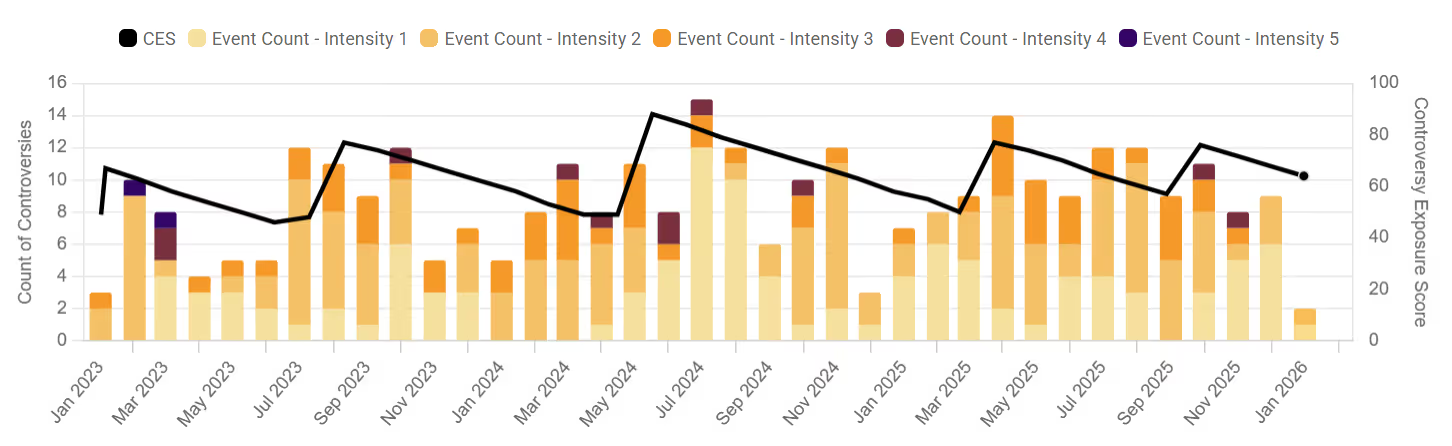
We studied the mentions of both ESG initiatives associated with the brands and detected that over the analyzed time frame, SHEIN has been associated with significantly more initiatives than TEMU.
We analyzed the sustainability initiatives of these companies, finding that SHEIN's efforts outpace TEMU's significantly.
SHEIN focused on circular economy practices, exemplified by partnerships like that with Queen of Raw to reuse excess industry inventory and launches such as EvoluSHEIN and SHEIN Exchange, also boosting Product safety mentions, which promote recycled materials and resale of used products, respectively.
Throughout our analysis period, we noted that 2022 was a turning point for SHEIN's sustainability efforts, sparked by several mentions of breaches related to the Modern Slavery Act and child labor allegations in the previous year, which subsequently increased the company’s sustainability-related mentions. By 2023, as SHEIN prepared for potential IPOs in the US and UK and with the release of a controversial documentary, the company faced heightened scrutiny, with more allegations surfacing in its supply chain concerning various acts and legislations, such as the Modern Slavery Act, Uyghur Forced Labor Prevention Act, and others. Despite these challenges, mentions of SHEIN’s ESG initiatives also rose, although they remained less prominent than risk-related mentions due to controversies typically gaining more attention online. However, from 2024 to the present, we have observed more initiatives than risks, suggesting that, despite some acts and legislations being non-binding or not directly applicable to SHEIN, the potential reputational impacts drive the company toward positive change.
It's worth noting that we've observed discussions linking SHEIN with the recent EU Corporate Sustainability Due Diligence Directive, also referred to as CSDDD or CS3D. These discussions underscore the view that governments should refrain from incentivizing fast fashion companies like SHEIN. As the CSDDD is expected to bring about significant changes, forcing businesses to identify, prevent, or mitigate adverse impacts of their operations on human rights and the environment. Notably broader in scope compared to previous legislation, this directive will apply to all EU companies surpassing a certain revenue threshold. Consequently, fast-fashion retailers like SHEIN will face increased requirements to take action and ensure compliance.
The absence of enforceable regulations allows companies like TEMU to continue operating, but SHEIN's actions, particularly as it moves towards an IPO, raise questions about whether its efforts to improve practices are driven by the scrutiny associated with preparing for a public offering or by a sincere commitment to compliance with laws and regulations.
To conclude, our analysis underscores the dynamic landscape of supply chain regulations, ESG risks, and sustainability initiatives within the specialized retail sector, particularly in the fast-fashion industry. A focus on SHEIN and TEMU reveals a rise in both ESG initiatives and identified breaches. SHEIN's proactive initiatives suggest a response to regulatory pressures. Additionally, our findings suggest that even without binding legal requirements, companies may still choose to comply to enhance their reputation or respond to heightened scrutiny.
Reach out to SESAMm
TextReveal’s web data analysis of over five million public and private companies is essential for keeping tabs on ESG investment risks. To learn more about how you can analyze web data or to request a demo, reach out to one of our representatives.
Watch CEO Sylvain Forté discuss SESAMm’s solutions for corporations focused on supply chain and client reputational risk monitoring during an interview with FF News at FinovateEurope last March.
Watch the full recording:
Stay ahead with the latest in ESG and AI intelligence
Join our mailing list to receive new reports, event invites, and updates from SESAMm directly to your inbox.