Unlock the Future of Risk Mitigation with AI-Driven Insights
November 3, 2023
•
5 mins read
SESAMm recently hosted a webinar led by Lead Solutions Engineer Leo Shamash. The session focused on the critical role of Artificial Intelligence in identifying and managing ESG (Environmental, Social, Governance) risks and controversies, especially in private companies.
During the webinar, Leo Shamash shared insights on how SESAMm’s advanced AI technologies analyze millions of daily articles to provide accurate ESG risk assessments.
Why is this important for private equity firms? Because traditional methods of risk assessment are often labor-intensive and limited in scope. SESAMm’s AI-driven approach offers a scalable, efficient solution. The webinar also touched on SESAMm's extensive data lake comprising over 20 billion documents, making it one of the largest repositories for tracking ESG risks and controversies.
Watch the webinar replay now:
Join us for our next webinar on November 15 at 4 PM Paris time/10 AM New York time, and watch Sylvain Forté share his insights into how artificial intelligence can help distinguish between genuine sustainability efforts and greenwashing. Book your spot.
Reach out to SESAMm
TextReveal's web data analysis of over five million public and private companies is essential for keeping tabs on ESG investment risks. To learn more about how you can analyze web data or request a demo, contact one of our representatives.
SESAMm, a leading provider of Big Data and Artificial Intelligence technology for investment managers, has been recognized with the Best of Show Award at Finovate Europe 2022, which took place on March 22nd and 23rd in London. The award was granted to SESAMm following a demonstration conferred by CEO and Co-founder Sylvain Forté, during which he showcased the company's marquee product TextReveal®.
"Finovate Europe represents a unique opportunity for best-in-class Fintech companies to showcase their innovations in front of leading institutions. It was great to demonstrate our product in front of an elite audience and win the Best of Show award." Said Sylvain Forté, CEO of SESAMm,"We are proud to say that this event was a big success for SESAMm, judging by the level of interest in our technology and its applications to the current ESG topic."
SESAMm is a fintech company that specializes in Big Data and Artificial Intelligence. Through its product, TextReveal®, the company provides analytics and investment signals to finance and corporate professionals by analyzing over 17 billion web articles and messages using natural language processing and machine learning. TextReveal® is a ready-to-use alternative data platform; its NLP (Natural Language Processing) powered engine provides daily sentiment and ESG data mapped to public and private companies to fuel investment strategies.
Finovate Europe, one of the most awaited annual events, sheds light on innovative fintech startups and helps them gain more recognition. It brings together over 1,000 senior finance and tech experts, including “demoers” and insightful speakers.
"We love to see companies like SESAMm join us at Finovate demonstrating their cutting-edge technologies. It really underscores our commitment to provide a platform to promote innovative startups in the financial ecosystem." Said Greg Palmer, VP of Finovate. "Congrats to the SESAMm team for winning Best of Show, it’s clear they really resonated with our audience!"
SESAMm's successful appearance at Finovate Europe once more confirms the great reception the company is getting in the industry, as just a few weeks ago, it was announced that SESAMm was the recipient of the HFM award for Best use of Artificial Intelligence.
TextReveal® Streams emphasizes SESAMm's goal to provide future investors with the accurate and necessary data to make decisions accordingly. Find out more here.
About SESAMm:
SESAMm is a leading company in alternative data and artificial intelligence, delivering global investment firms and corporates data-driven insight and investment analytics. It owns a proprietary 13 years historical data lake containing over 17 billion articles publicly sourced from more than 4 million sources (blogs, forums, social networks, etc.). This represents 10 to 100 times more information than that of our competitors.
BNP Paribas has released its 2025 ESG Global Survey, revealing how institutional investors are adapting their sustainability strategies in the face of shifting market dynamics, rising regulatory scrutiny, and increased public skepticism. The report surveyed 420 asset owners, asset managers, and private capital firms across 29 countries, representing a combined $33.8 trillion in assets under management, and paints a complex but ultimately optimistic picture of ESG’s evolution.
Resilient Commitment Amid a Changing Landscape
Despite growing political backlash and accusations of greenwashing in various markets, investor commitment to ESG remains strong. A large majority, 87%, said their ESG or sustainability objectives have remained stable, and fewer than 3% expect to scale back their commitments. Furthermore, 84% anticipate that their organizations will continue to progress on sustainability goals through 2030.
However, this confidence is paired with a new sense of caution. Forty-one percent of respondents reported a more restrained approach to publicly promoting their ESG activities. This shift reflects broader concerns about reputational risk and regulatory ambiguity, particularly in markets where ESG has become politicized. Still, the underlying momentum toward long-term ESG integration appears undeterred.
From Broad ESG to Thematic and Impact Strategies
The report also signals a shift from general ESG investing toward more targeted strategies, especially thematic investing. Eighty-five percent of participants now apply sustainability criteria to investment decisions, and 59% actively pursue thematic strategies such as climate resilience or social equity. Top investment priorities over the next two years include increasing allocations to the energy transition, divesting from carbon-intensive assets, and using active ownership to push portfolio companies toward improved ESG outcomes. This thematic focus suggests a maturation of ESG strategies, with more precise goals and performance expectations.
Emergence of ESG “Pacesetters”
A standout insight from the survey is the rise of “pacesetters,” the 19% of respondents that have achieved the highest levels of ESG integration. These advanced investors have already embedded ESG factors across portfolios, including metrics related to social impact, biodiversity, and “The Just Transition Mechanism”. Nearly all pacesetters are actively decarbonizing their portfolios and report alignment with broader societal and environmental goals.
This group is not only more sophisticated in managing ESG risk but also more likely to view ESG as a long-term value driver. Their practices highlight what comprehensive ESG adoption can look like when paired with sufficient resources, internal alignment, and robust data.
Private Capital’s Expanding ESG Role
Private capital managers are also emerging as key ESG players. More than half are using active ownership strategies, while 76% emphasize social impact, and 63% are engaged in just transition initiatives. These firms see ESG as an opportunity to generate alpha, align with stakeholder expectations, and lead in sustainability-driven innovation.
The Critical Role of Data and Partnerships
Finally, the survey underscores the growing importance of ESG data and trusted partners. Nearly half of all respondents expect to increase budgets for ESG data acquisition and analysis. When selecting financial partners, ESG reputation and expertise are increasingly decisive factors.
Overall, the 2025 survey shows that institutional investors remain deeply committed to ESG, but are evolving in how they execute and communicate these strategies. The future of ESG appears less about bold declarations and more about targeted, data-driven action.
SESAMm’s AI Technology Reveals ESG Insights
Discover unparalleled insights into ESG controversies, risks, and opportunities across industries. Learn more about how SESAMm can help you analyze millions of private and public companies using AI-powered text analysis tools.
If I told you that I had a crystal ball and could predict the future, you’d probably laugh in my face. But what if I told you that this crystal ball could give you seemingly invisible data indicating what the future is likely to be, helping you make better investment decisions? Did your ears perk up? I bet they did.
Alternative data, specifically natural language processing (NLP)-generated alternative data, is like a crystal ball. It can help portfolio managers, analysts, and public equity investment managers make better decisions by identifying controversies about a company or potential investment before mainstream data providers and ESG rating firms can. That means you can take data-informed actions before a possible change in your investment value occurs.
That was a lot, so before we go further, let’s cover a quick basic as a refresher.
What is alternative data?
Alternative data is non-traditional information extracted from non-traditional data sources, such as internet social media communities and deeper-level article data. This subset of big data is often nonfinancial and unstructured.
Why use alternative data for finance?
In financial services, alternative data sets give investors insight into the investment process and guide their investment strategies. For example, quant hedge fund managers, asset managers, and private equity firms use alternative data to augment conventional data like those that come from quarterly financial statements and SEC filings. This unconventional data can reveal insights such as metrics on environmental, social, and corporate governance (ESG) information, sentiment analysis, and consumer behavior.
Where does alternative data come from?
Firms, such as data vendors or alternative data providers, find raw data from various sources, depending on the details you need. For instance, they can pull data from transaction data, like credit card transactions, text data from social media platforms and obscure media publishers. They can also extract information from technologies like satellite imagery and geolocation data, IoT sensors, web traffic, app usage, and new data sources yet to exist. All to say, alternative-data sources are found anywhere unconventional, valuable data live.
How does NLP-generated alternative data differ?
NLP-generated alternative data is more than raw data collection and presentation. Instead, it reveals the hard-to-see data and interprets it so you can make better decisions. At SESAMm, for example, we generate alternative data from text using NLP algorithms on a massive, ready-to-use data lake to identify noteworthy trends. Our developers and data scientists then use their machine learning technology to analyze these trends and build investment strategies for our clients.
How can alternative data identify controversies before mainstream providers and ESG rating firms?
There are two main ways alternative data identifies controversies before mainstream providers and ESG rating firms:
First, NLP-generated alternative data’s inherent quality is that it can reveal trends that mainstream providers and ESG firms can’t. And because of this quality—the ability to identify and analyze trends—you can use it to see warnings before a major controversy hits the mainstream.
Second, rating providers can be inconsistent and inaccurate, according to Andrew McLaughlin, a contributor to The Globe and Mail. He states that many ESG rating providers, for instance, are “popping up like dandelions,” and “each uses its own methodologies to rank and score publicly traded companies based on their purported environmental, social and governance risk and performance.” Further, “[their] reports produced are at times rife with inaccuracies,” McLaughlin says. While we at SESAMm might not agree with McLaughlin completely, we believe that alternative data helps bridge the gap between possible shortcomings and a more comprehensive view of an investment’s risks and opportunities.
2 NLP-generated alternative data use cases as examples:
Ericsson (ERIC) analysis
Event: On February 16, 2022, Ericsson investigates an in-house bribery scandal tied to ISIS. According to FIERCE Wireless, “investors reacted to reports that Ericsson may have made payments to the ISIS terror organization to gain access to certain transport routes in Iraq.”
Results: Ericsson’s share value dropped by at least 15% that day as news broke and investors reacted. “It was its biggest share drop in a day since July 2017,” per FIERCE Wireless.
What did NLP-generated alternative data see?
In Ericsson’s case, we analyzed three areas from January 2016 to the event on February 16, 2022:
Name-mention volume
Sentiment polarity
ESG Initiatives Score
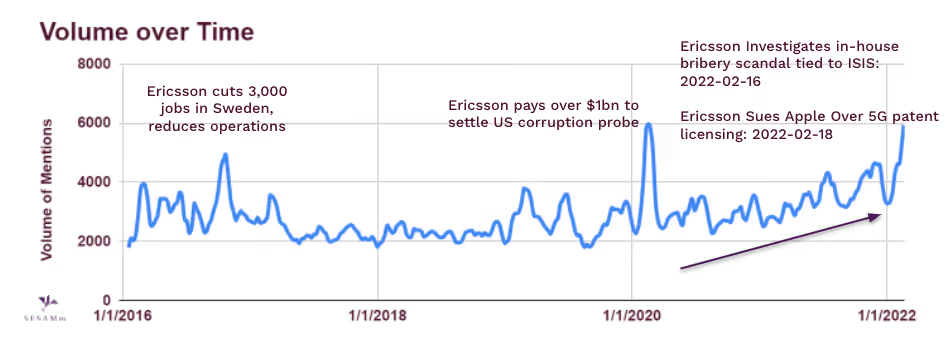
Figure 1: Volume over time chart for Ericsson
In Figure 1, we chart our analysis of data volumes, indicating spikes to help detect significant positive or negative events. For instance, the payment scandal similarly affected mention volume as a controversy in 2020. Mentions related to the more recent events continue to increase, making it potentially Ericsson’s most controversial issue so far.
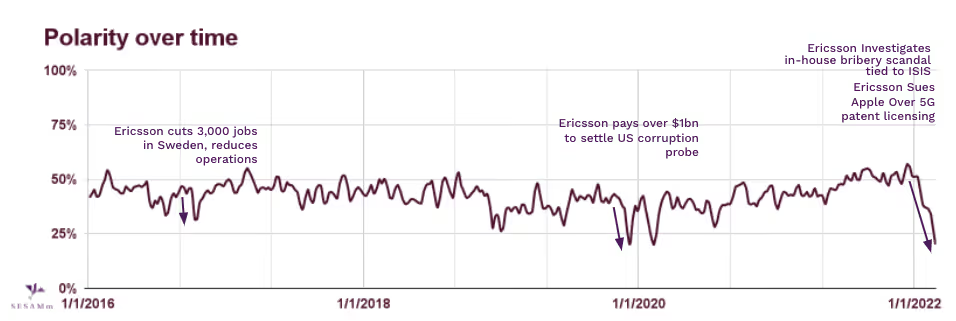
Figure 2: Polarity over time chart for Ericsson
In Figure 2, we analyze Ericsson’s polarity over time. Polarity represents the aggregate of positive and negative sentiment (opinions, reviews) on a company. It can range from -1 to 1. A 0 score means that as much positive as negative sentiment is expressed. High e-reputation brands can have polarity scores over 0.7, based on SESAMm’s research and findings.
Ericsson’s overall polarity sits in the average range for the most part. However, we found that Ericsson’s sentiment suffered significant negative drops caused by controversial news. In other words, the company’s reputation has been affected several times over the years, with the most recent controversies going viral and perceived as very negative.
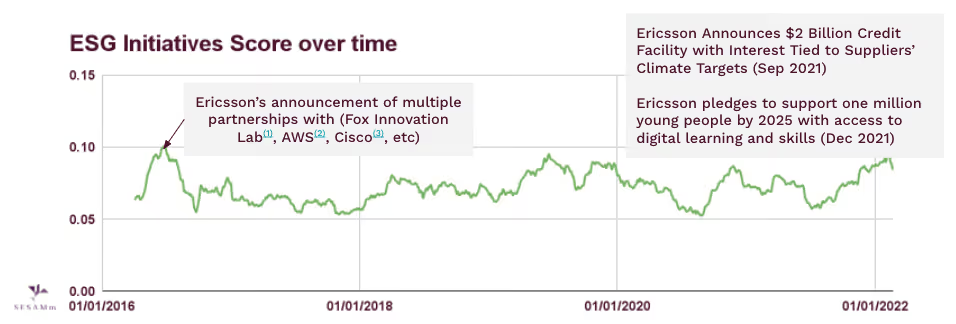
Figure 3: ESG Score over time for Ericsson
In Figure 3, SESAMm used the analyzed areas and comparisons to compute an ESG Score based on proprietary ESG initiatives data. The scale ranges from 0 to 1, with zero indicating a low and undesirable value and one having a higher and desirable value. We score Ericsson in the 0.05–0.10 range, which we think is relatively low for this company. Despite Ericsson increasing its ESG initiatives over the past year, recent controversies have affected its score negatively.
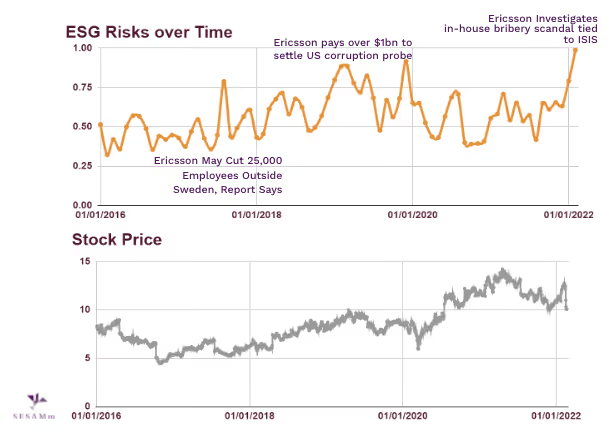
Figure 4: Ericsson’s ESG risks over time compared to its stock price
Figure 4 charts Ericsson’s ESG risk, which is based on SESAMm’s web data. The range varies from 0 to 1, zero indicating the lowest risk and one as the highest. Ericsson’s score from its latest scandal is a 1. Compared to Ericsson’s stock prices, several spikes in ESG risk anticipated market movements.
Orpea SA (ORP:FP) analysis
Event: On January 24, 2022, Le Monde published an article about the book “Les Fossoyeurs”. According to Le Monde, the book concentrates most of its attacks on Orpéa, a top nursing homes and clinics company, employing “65,000 employees in 1,100 establishments across the planet; 220 nursing homes in France alone.” The book’s author attacks the “Orpea system” and reveals reported elderly abuse and deaths possibly caused by it or negligence.
The media begins to question the limits of ESG rating because of Orpea’s scandal.
Results: Two things occurred after the news broke. One, Orpea’s stock price sustained a 44-point drop. Two, the media begins to question the limits of ESG rating, given Orpea’s rating at the time.
What did NLP-generated alternative data see?
In Orpea’s case, we analyzed three areas from January 2016 to the event on February 16, 2022:
Name-mention volume
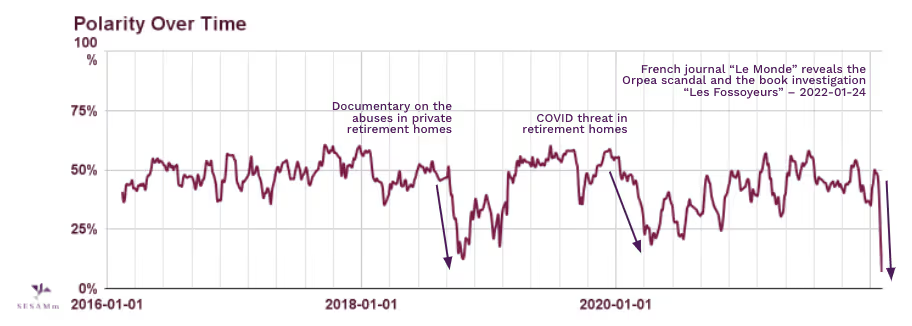
Sentiment polarity
ESG Initiatives Score
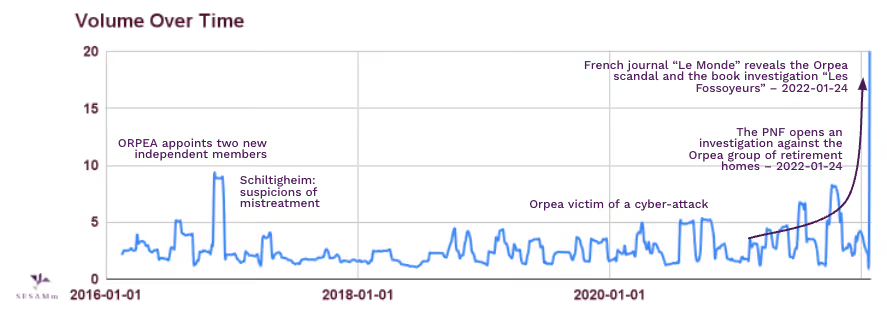
Figure 5: Volume over time chart for Orpea
In Figure 5, we analyzed volumes of data and compared them with significant events detected. Volume spikes detect clear, negative events in Orpea’s case. For instance, on January 24, 2022, the breaking news had the highest effect since 2016. It’s worthy to note that an upward mention trend becomes visible before the scandal emerges, with volumes reaching levels higher than average.
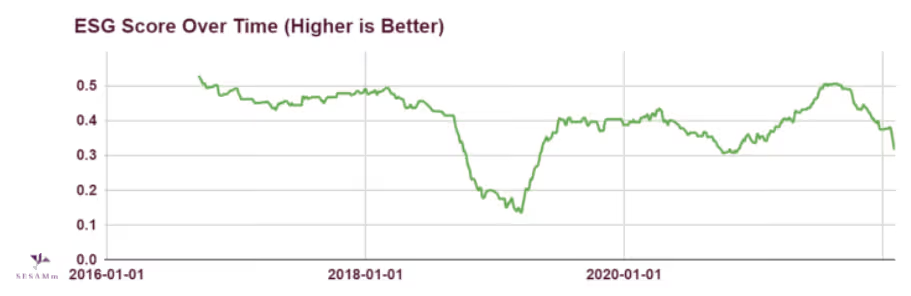
ESG scores, which range from 0 to 1, are relatively low for Orpea on average. Its controversies have strongly affected its scores in 2018 and 2022 in particular. But the trend to see in the chart is that Orpea’s ESG score had been trending downward for several months before Le Monde’s breaking story.
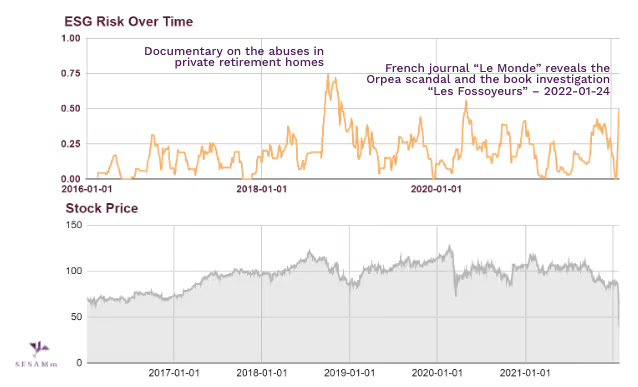
Figure 8:Orpea’s ESG risks over time compared to its stock price
Figure 8 charts Orpea’s ESG risk, which is based on SESAMm’s web data. The range varies from 0 to 1, zero indicating the lowest risk and one as the highest. Ericsson’s score from its latest scandal is a 1. Compared to Orpea’s stock prices, several spikes in ESG risk anticipated market movements. The current controversy, while very viral, represents a risk equivalent to the 2018 revelations.
Summarizing SESAMm’s Ericsson and Orpea findings
NLP-generated alternative data was able to see trends and events that mainstream ESG rating firms didn’t in the Ericsson and Orpea cases. In both cases, SESAMm would’ve flagged controversies in at least three key areas, name-mention volume, sentiment polarity, and ESG Initiatives Score. And these three areas, with additional proprietary analysis from SESAMm, would’ve provided much-needed insight to investors before their respective market-moving events had occurred.
How SESAMm’s NLP-generated alternative data can help you
Whether for fundamental, quantitative, or quantamental investment use cases, to monitor your corporate risks, or to conduct advanced due diligence on private companies for investment opportunities, explore limitless possibilities using SESAMm’s industry-leading data lake. Our data lake consists of nearly 20 billion articles today, and it’s growing by 20% every year. And if our data lake is our crystal ball, then TextReveal® is what fuels its magic. The data, in conjunction with TextReveal’s NLP algorithms, can reveal alternative data, such as emotion and sentiment data and ESG and risk metrics, on more than 70 million entities like:
Assets
Brands
Product reviews
C-level people
And more
And you can easily access valuable alerts and predictive insights—from live daily or historical data—through dashboards, APIs, or flat files delivered in usable formats. Are you ready to uncover the invisible data about your investments? Request a demo today.
Stay ahead with the latest in ESG and AI intelligence
Join our mailing list to receive new reports, event invites, and updates from SESAMm directly to your inbox.




.avif)





.png)